


Spring is in the air. And that means it’s time for full skirts and photo sessions as young people across the area begin celebrating their milestone fifteenth birthdays with a quinceañera. This special event is a coming-of-age ritual for many families of Latin American heritage.
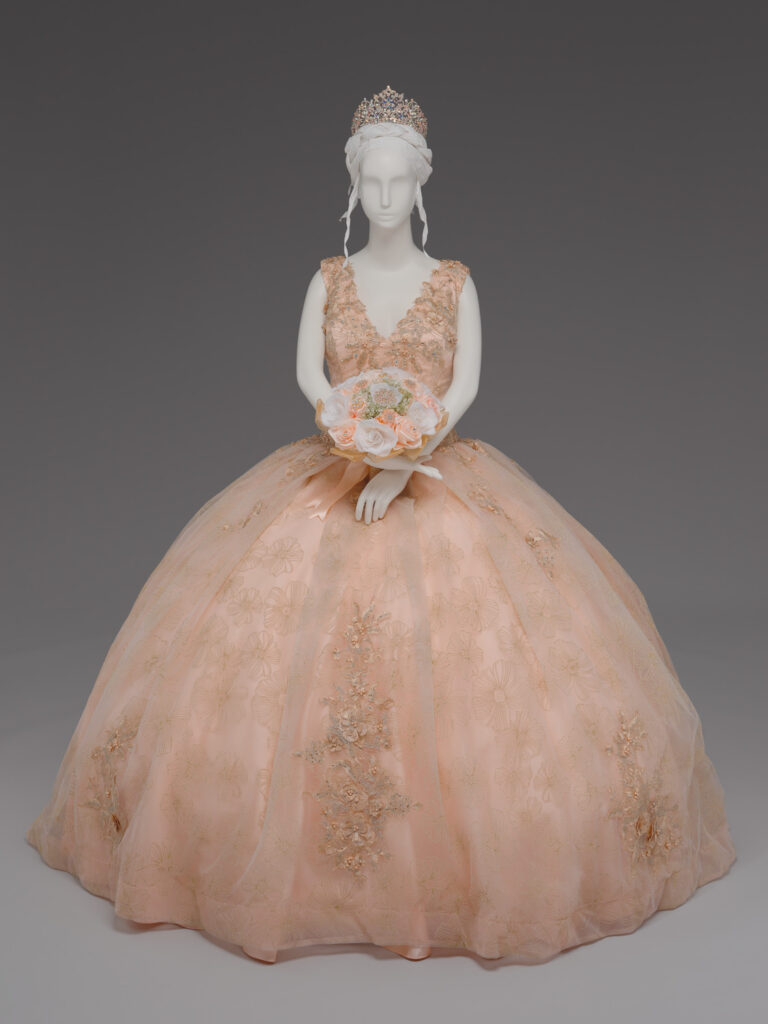
Front view of a quinceañera ensemble from Mi Quince World with a matching bouquet and tiara, c. 2024. Created by Nelly Lizcano; Susana Cavazos, Wendy Clavijo, Anahi Marin, Giselle Morales, Juanita Rangel, Ariella Santoyo. CHM, ICHi-186341
Traditionally, the quinceañera looks a bit like a wedding, minus the groom. A young lady attends mass with her family and then makes her debut at a party surrounded by a coterie of damas and chambelanes (ladies and gentlemen of her court). She may wear her first high heels, give her last doll to a younger member of the family, receive gifts of money, and enjoy toasts in her honor and a delicious meal.
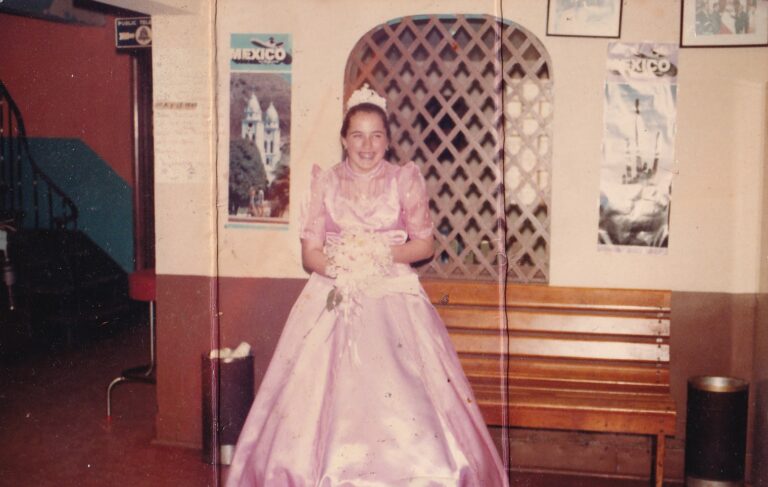
Juanita Villarreal wears a quinceañera dress made by her mother, Maria Villarreal, 1983. Courtesy of Roman and María Villarreal
Though the celebration of the quinceañera often retains a religious component—celebrating mass—the focus is now, more than ever, on the individuality of the celebrant and the culture. And the celebration is beginning to include young men and nonbinary folks as well as young women. Clothing is often the space we use to express our identities, and in the quinceañera that often takes the shape of a gown. 26th St. in Little Village, La Veintiséis, is the place to shop for quinceañera gowns and accessories, not only in Chicago but all over the Midwest and beyond.
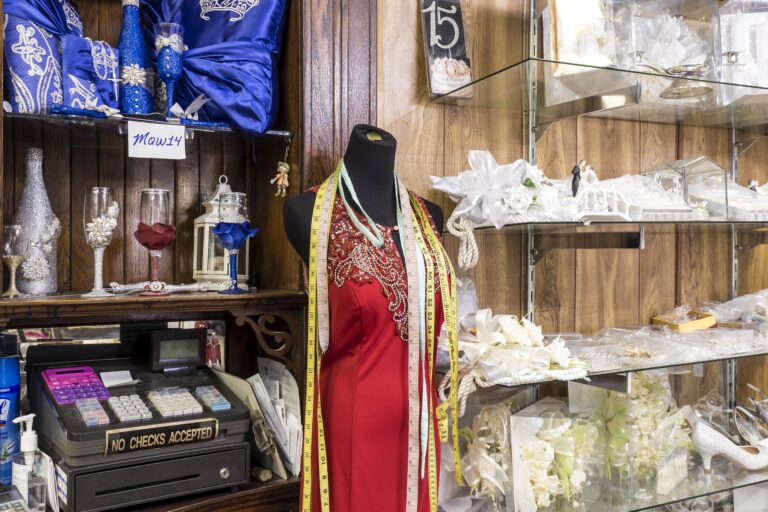
Interior view of Mi Quince World, 2018. Courtesy of Jonathan Michael Castillo
After Michigan Avenue, 26th St. is the highest grossing street in Chicago. Chicago has roughly 80,000 Latine businesses (Illinois has roughly 140,000), and, during Operation Midway Blitz last fall, the businesses on 26th St. were hit particularly hard, losing sometimes 40–60% of their business. This is an excruciating, sometimes insurmountable burden for a small, independent business.
Ariella Santoyo and Jesús “Jesse” Nevares, co-own Mi Quince World on 26th St. It grew from their more general apparel business, started in 2006, to focus entirely on the quinceañera in 2008. The selection of gowns on site, mostly made in Mexico and locally, the customization of the gowns, and the focus on themes sets the shop apart. The seamstresses and designers at the shop do the beading, embroidery, lace, and other decorations themselves as well as the entire conjunto of supplies for the event: bouquet, bible, kneeler for mass, guest book, and so on. The tiaras also come from a single maker in Mexico.
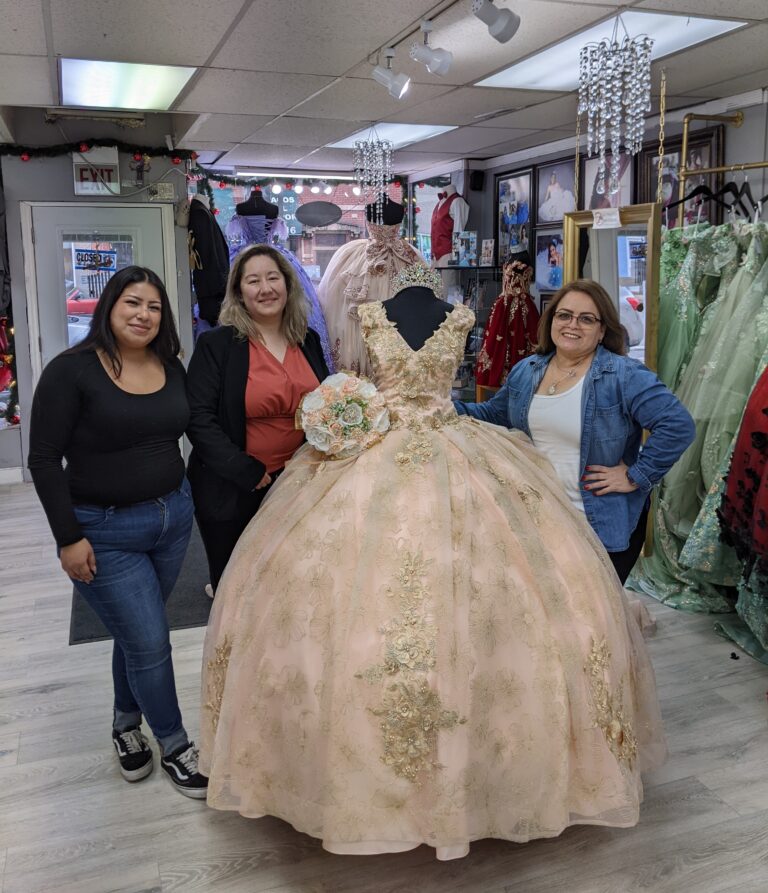
Mi Quince World staff pose with the peach gown that was on display in Aquí en Chicago. Photograph by Elena Gonzales
In 2023 Ariella graciously recorded an oral history about the shop and the tradition of the quinceañera and, in 2024, Mi Quince very generously made two glorious—and very different—gowns specifically for the Chicago History Museum’s permanent collection. The gowns each had their time on display Aquí en Chicago (on view through November 8, 2026).
The traditional peach and champagne-colored gown (on display first) might appeal to celebrants across Latin American heritages, not only Mexicans (who make up 73% of the Latine third of Chicago). This gown is a classic, sparkling vision of femininity featuring a skirt nearly eight feet in diameter and a long train covered in rhinestones and applique. The tiara (from a single maker in Mexico) features an iridescent floral pattern.
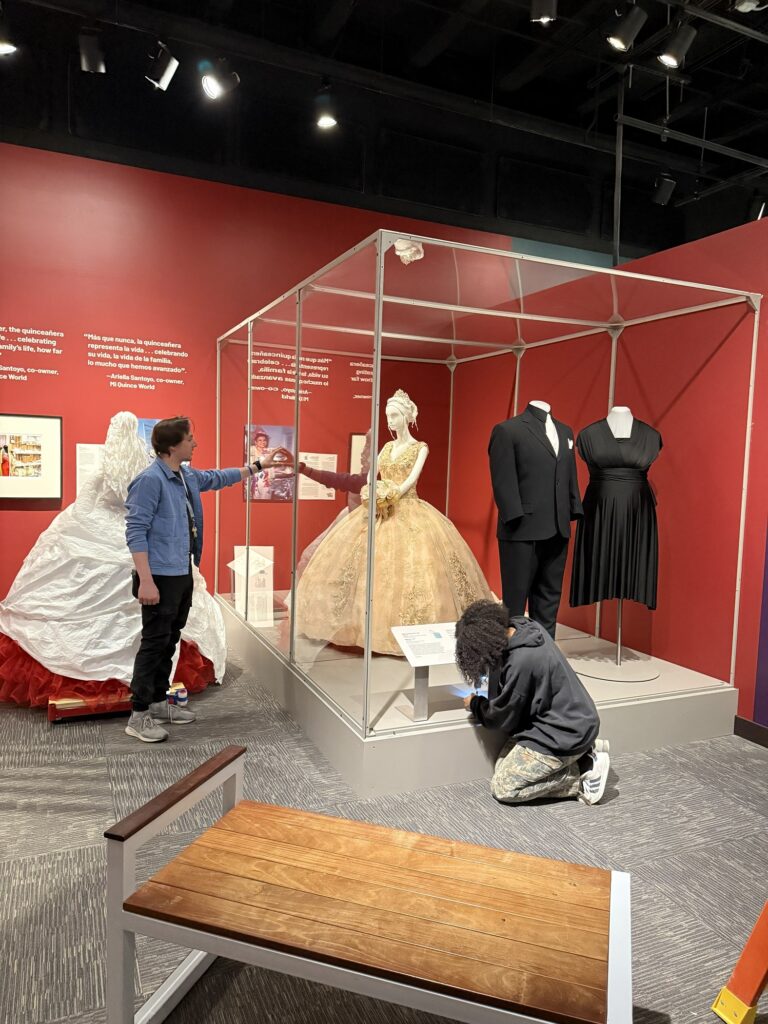
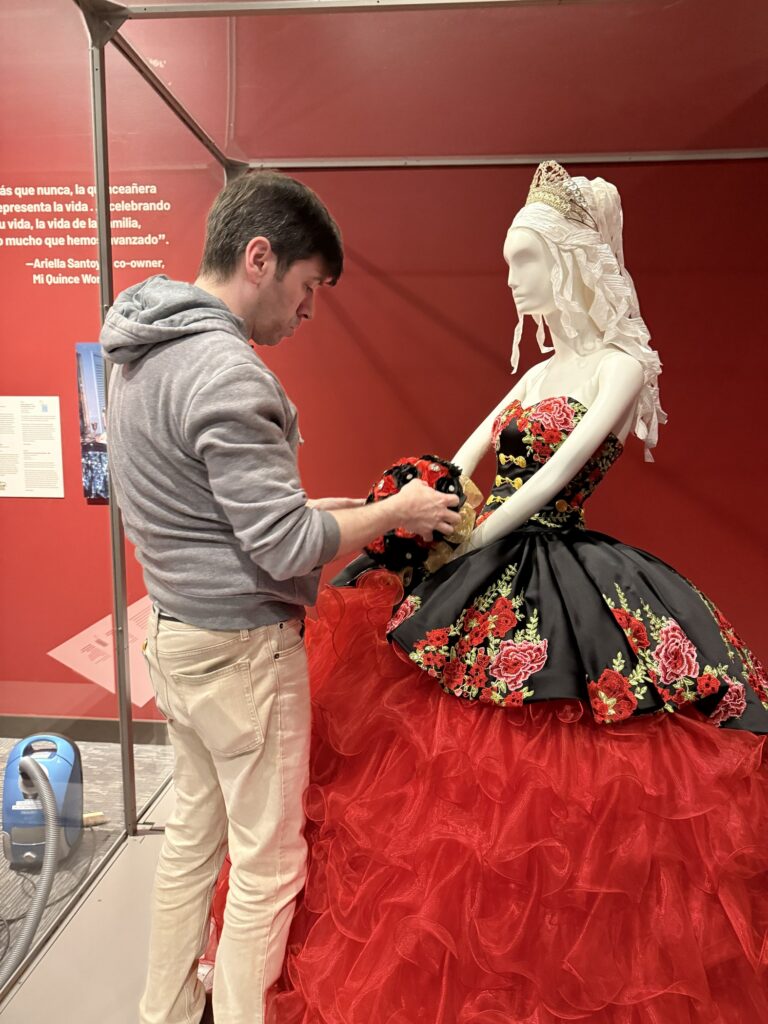
Left: CHM production manager Ethan Gasbarro and lead preparator Taylor Ausley open the display case to switch out the gowns. Right: CHM mount maker Michael Hall adjusts the bouquet that coordinates with the escaramuza gown. Photographs by CHM staff
On April 29, 2026, the vibrant escaramuza or equestrian-style gown came on view with a distinctly Mexican aesthetic. The escaramuzas or female charros began competing in teams in Mexico in the 1960s and are cultural icons of today of a femininity that is wild and daring yet noble, powerful, and accomplished.
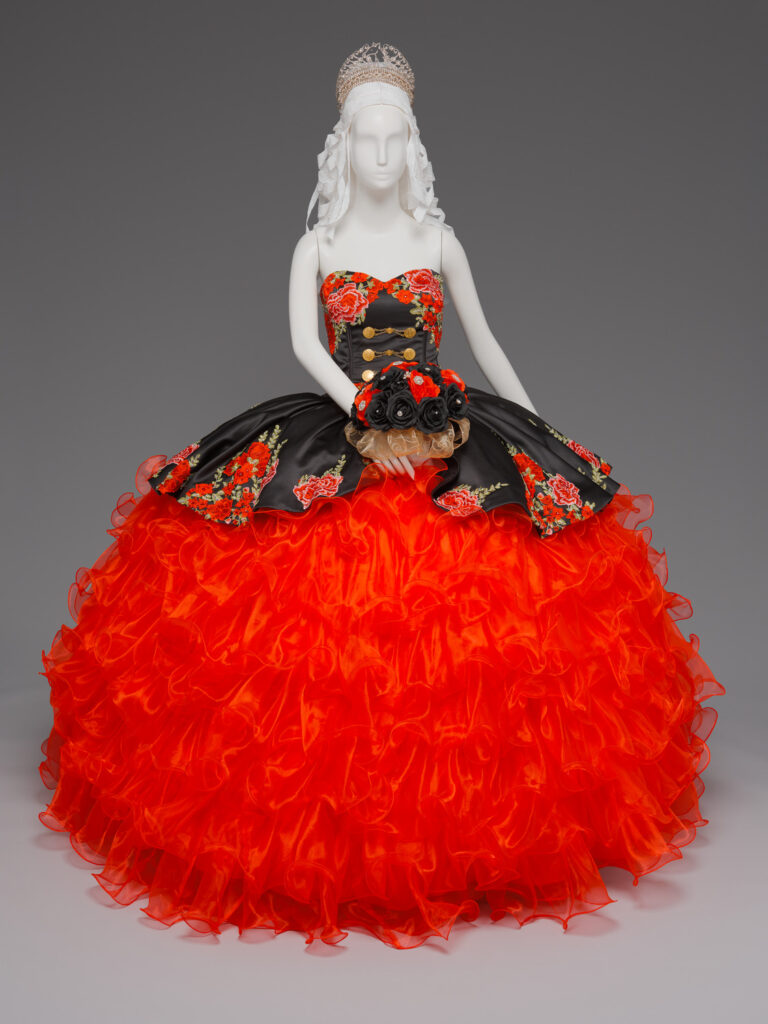
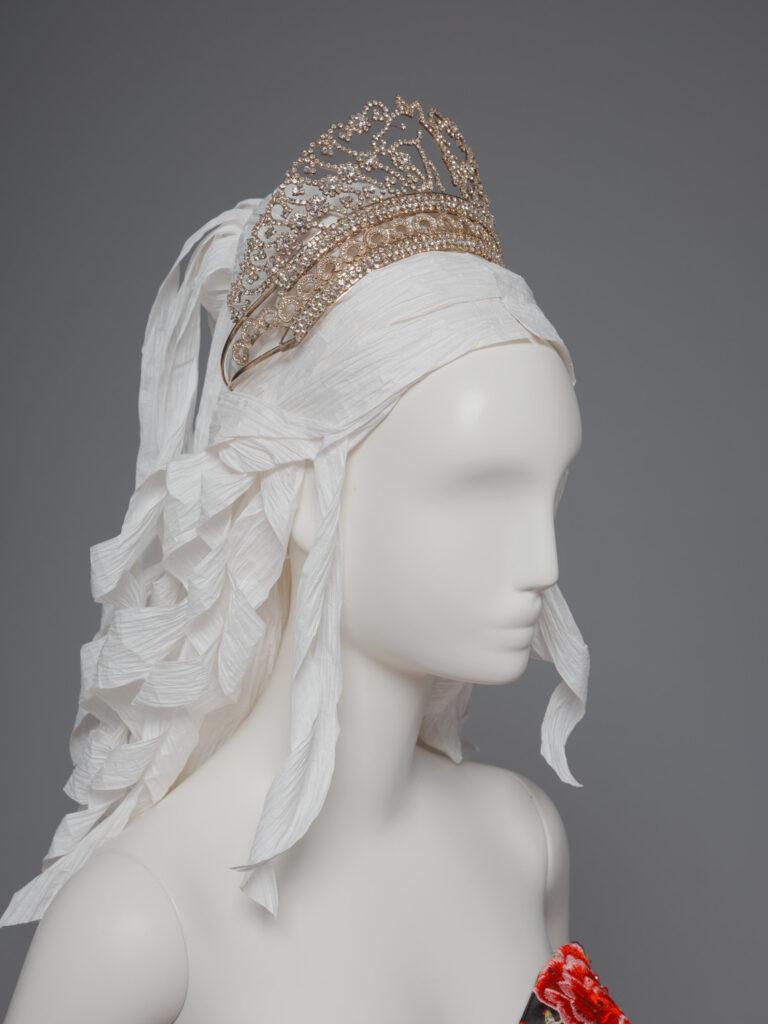
Front view of a charro style quinceaёera dress and accessories, c. 2024. Ensemble includes a bodice with floral appliques, a matching overskirt, a red tiered underskirt, a tiara, a bouquet of faux roses. Created by Nelly Lizcano; Susana Cavazos, Wendy Clavijo, Anahi Marin, Giselle Morales, Juanita Rangel, Ariella Santoyo. CHM, ICHi-186750
This red and black ensemble features a dramatically flounced skirt that may be removed for a sleeker look at the after-party with the black satin miniskirt and bustier embroidered with red roses. Note the horse in rhinestones in the tiara!
The golden buttons feature the image of the Piedra del sol or Aztec Calendar Stone, which appears several times throughout Aquí as a national symbol of Mexico that finds many homes in Chicago. The real Piedra is at the Museum of Anthropology in Mexico City and is enormous, weighing approximately 24 tons. The Aztecs carved it using stone from the Xitle Volcano between the 13th and 16th centuries.
¡Felicidades to all those turning 15 this season!
Additional Resources
- Listen to our podcast The Missing Exhibition: Building Aquí
- Read the New York Times article “Meet the Latino Boys Decked Out for Their Version of the Quinceañera,” January 11, 2025 (login required)
- Learn how you can support small businesses hit by Midway Blitz