


Cinco de Mayo is here, and the scent of lime juice is in the air! We’re popping salt on the rims of some festive cocktails. But why? Fighting colonial powers is the answer!
In the United States, Cinco de Mayo has become a general celebration of Mexican culture. Sometimes people even mistake it for Mexican Independence Day (which is actually September 16).
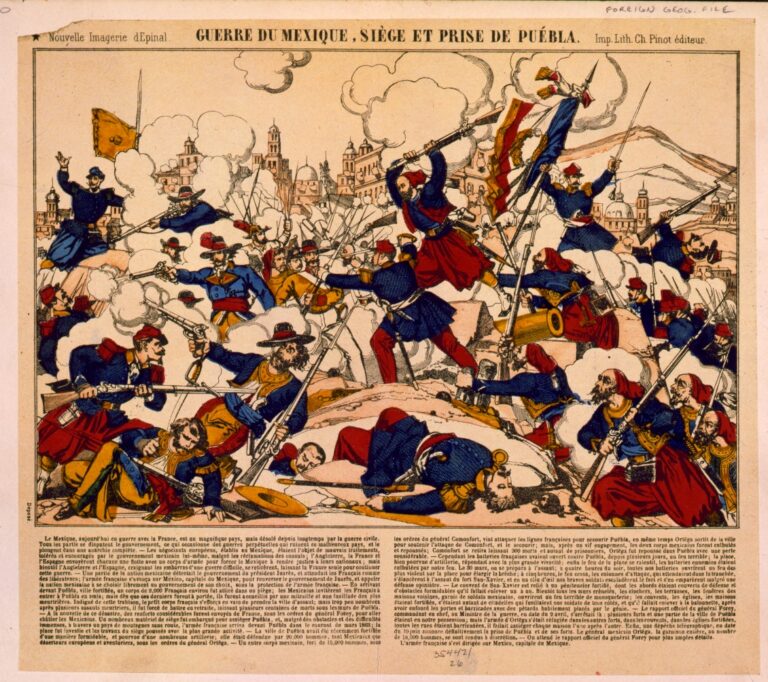
Guerre du Mexique, siège et prise de Puébla / Imp. lith. Charles-François Pinot éditeur, c. 1870. Library of Congress, LC-USZC4-2673
But the holiday is more specifically the celebration of a mixed-heritage (Indigenous, African, and European descent) Mexican victory over the French at the Battle of Puebla on May 5, 1862. The French intended to recolonize the newly independent Mexican nation, which won independence from Spain in 1821. Though Mexican resistance to the French colonizers took several more years to reach lasting victory, this was an important moment for Mexicans to publicly and very visibly reject the idea of new and additional colonization.
This rejection was crucial following on the heels of the US-Mexico War (1846–48), during which the US stole more than half of the land belonging to Mexico and occupied the state of Puebla and Mexico City. Then-US president James K. Polk requested that each state in the union send military troops to the US-Mexico border to fight in the war. Illinois governor Thomas Ford sent three regiments of local militia in 1846 in response.
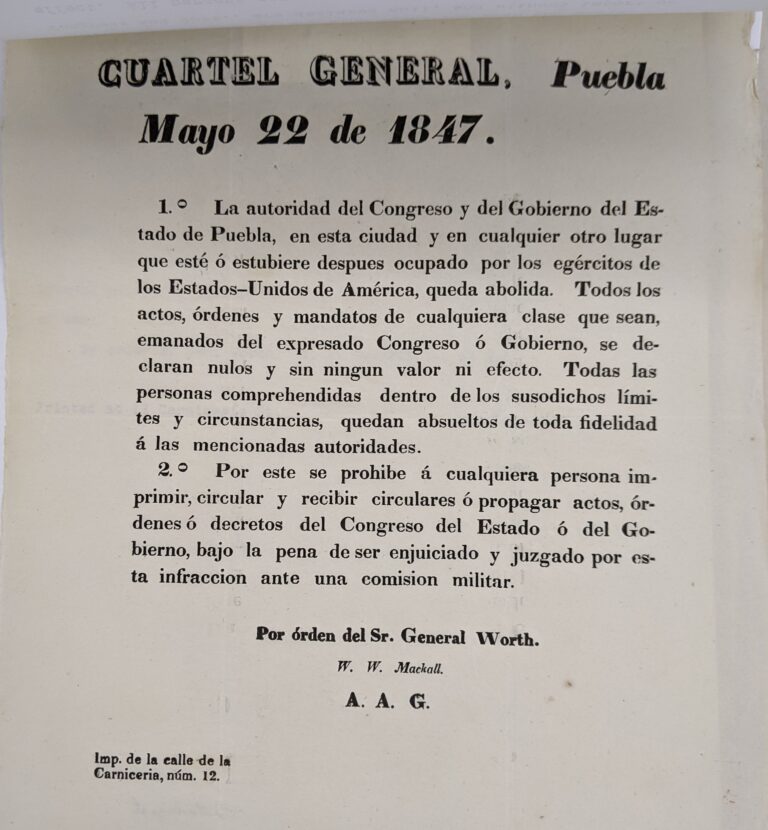
A copy of the order from General William Jenkins Worth saying that the government of the State of Puebla (and any other lands occupied by the US) is abolished by the occupying government of the US, May 22, 1847. CHM, Abakanowicz Research Center, broadsides collection
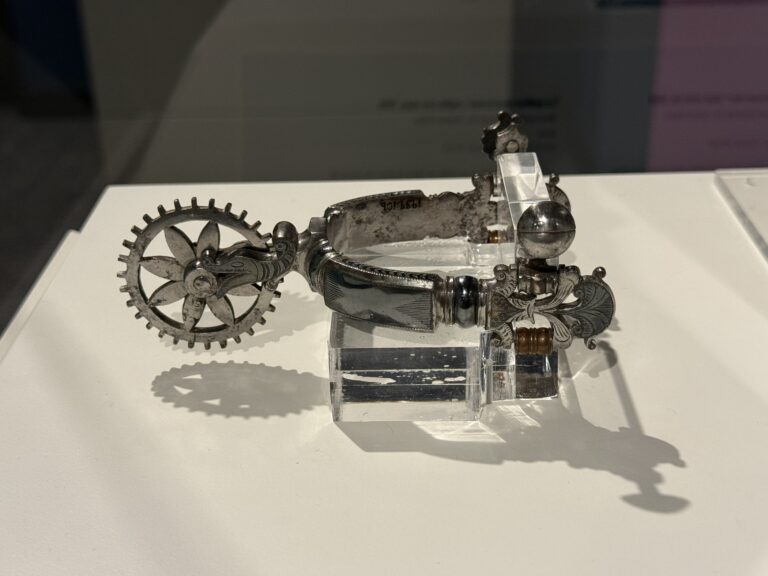
This local “contribution” to the war may be part of the reason why CHM has General Antonio López de Santa Anna’s ceremonial tack (spurs and bit) in its Americana Collection.
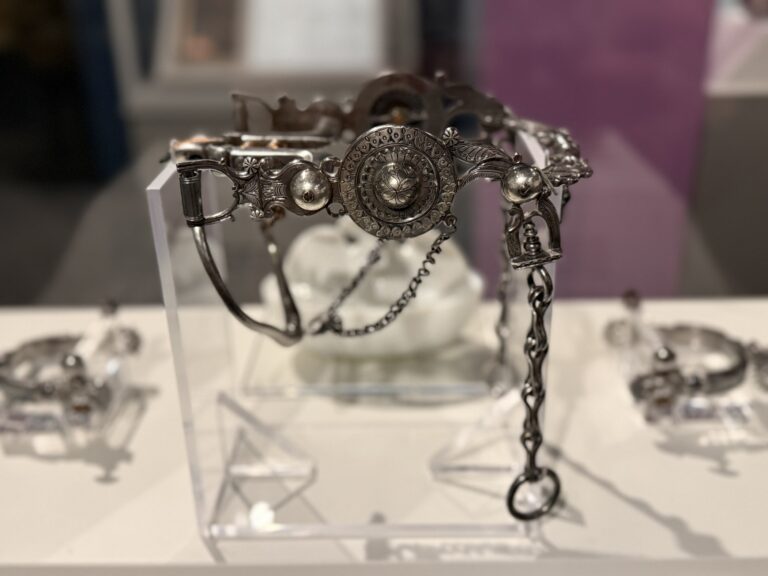
The bit (above) and one of the spurs (below) that belonged to Santa Anna, 1840–50, on display in Aquí en Chicago. Photograph by CHM staff
Santa Anna (1794–1876) was the 8th president of Mexico, a military leader who lost Texas to Sam Houston—and eventually to the US (1845). He allowed US forces to invade Mexico City (1847) and brokered the utterly bad deal (for Mexico) of the Gadsden Purchase (1854), selling off additional Mexican territory.
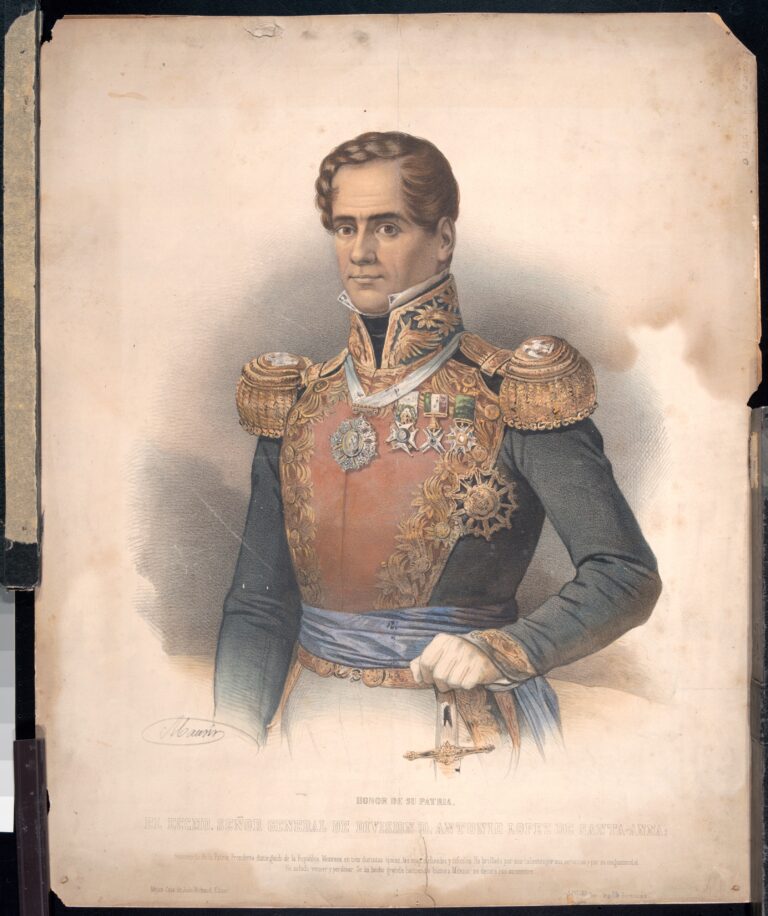
Undated lithograph of General Antonio López de Santa Anna. CHM, ICHi-053702
The success, from the standpoint of United Statesian empire building, of the US-Mexico War paved the way for much more imperial US expansion during the 19th century including, most notably, the theft of Puerto Rico, Cuba, and the Philippines from Spain in 1898.
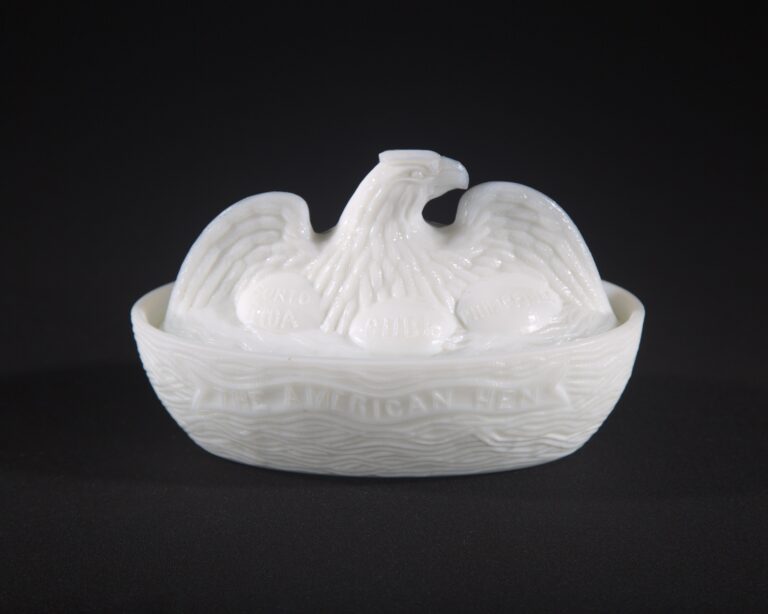
Milk glass dish with lid titled The American Hen, in the shape of an eagle sitting on a nest of eggs labeled “Purto Rica” (Puerto Rico), Cuba, and Philippines, 1898. CHM, ICHi-179104
So, this year when you’re firing up the grill, consider the ways in which US imperialism has helped create the Chicago we experience today. ¡Salud!
Additional Resources
- Visit our exhibition Aquí en Chicago, open now through November 8, 2026
- Listen to the episode 3, “We Came Here to Work,” of our podcast The Missing Exhibition: Building Aquí
- Consider reading Laura E. Gómez’s Inventing Latinos: A New Story of American Racism and Juan Gonzalez’s Harvest of Empire: A History of Latinos in America