


On October 14, 1906, the Chicago White Sox defeated the Chicago Cubs in the first intracity World Series. In this blog post, CHM curatorial interns Abigail McGraw-Traster and Olivia Marr give a brief overview of the series and highlight items in the Museum’s collections. McGraw-Traster is a third-year undergraduate studying anthropology and linguistics at the University of Chicago. Marr is a fourth-year undergraduate studying American popular culture and public history at DePaul University.
On October 9, 1906, thousands of “rooters” flocked to the Chicago Cubs’ West Side Grounds to watch the “Hitless Wonders” Chicago White Sox take on the record-breaking Cubs in the World Series. This Fall Classic featured the first ever intracity match up and the only one in the city’s history. Chicago became, according to sportswriter Hugh Fullerton, the “baseball center of the earth.”
The Cubs expected a massive crowd, but the weather didn’t cooperate. Some rooters wore bearskin coats as protection against frigid winds and snow flurries. Thousands more piled into the Auditorium Theatre in the Loop and the First Regiment Armory on the Near South Side, where the Chicago Tribune hosted telegraphed recreations of the game. Attendants reconstructed the play-by-play, moving player names across a large baseball diamond.
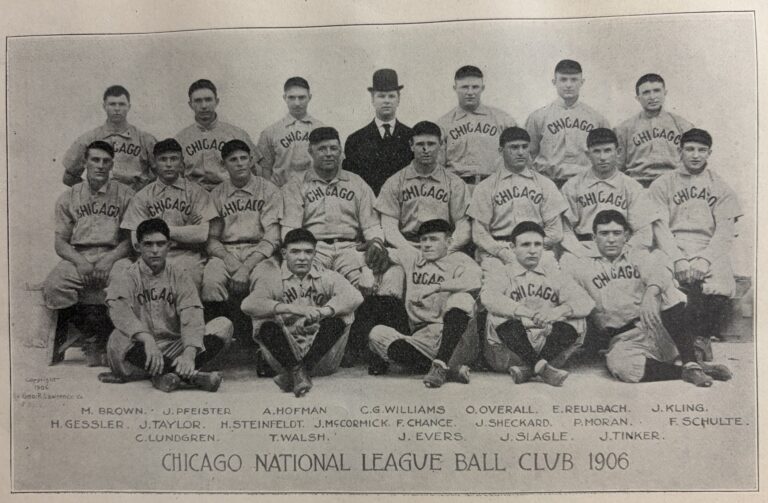
The 1906 Chicago Cubs team photograph from Sox and Cubs by W. A. Phelon, GV875.C2 P5. Photograph by Abigail McGraw-Traster and Olivia Marr
The highly favored Cubs put up 116 wins during the regular season, still the highest winning percentage in modern major league history at .763 (with a final record of 116–36–3). The Cubs star pitcher, Mordecai “Three Finger” Brown, boasted an ERA of just 1.04 and a formidable curveball. The Cubs also had an excellent defensive infield. Their double play combination, Tinker to Evers to Chance, was not yet made famous by the 1910 poem “Baseball’s Sad Lexicon,” but Cubs fans were certainly aware of this stellar trio. Eventually, Frank Chance, Johnny Evers, and Joe Tinker were all inducted into the Baseball Hall of Fame.
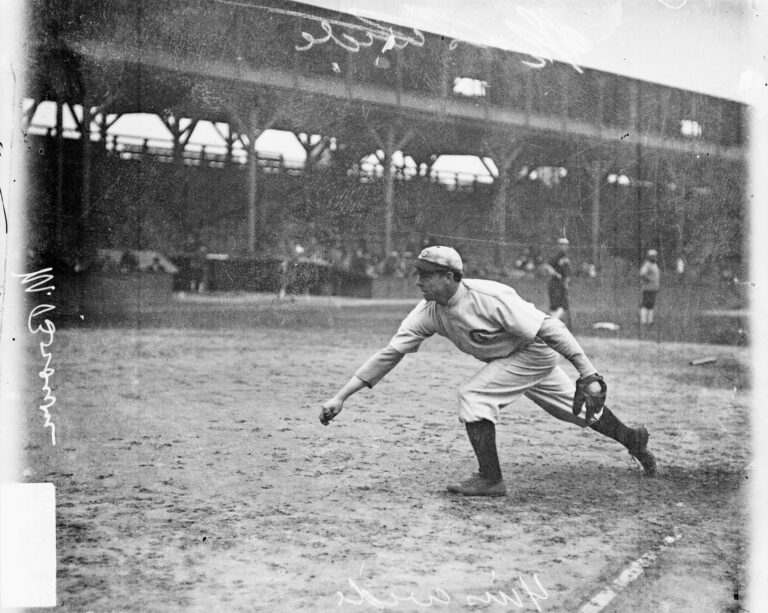
Cubs pitcher Mordecai “Three Finger” Brown, West Side Grounds, 912 S. Wood St., Chicago, 1909. SDN-055782, Chicago Daily News collection, CHM
The White Sox, on the other hand, were a big underdog in the series. At the end of July, they were in fourth place in the American League. However, with their remarkable pitching staff featuring Frank Owen and future Hall of Famer Ed Walsh, they managed to turn it around in August with a 19-game winning streak, setting a record for the major leagues that would stand for the next decade. Outstanding player-manager Fielder Jones kept the team together through success and adversity.
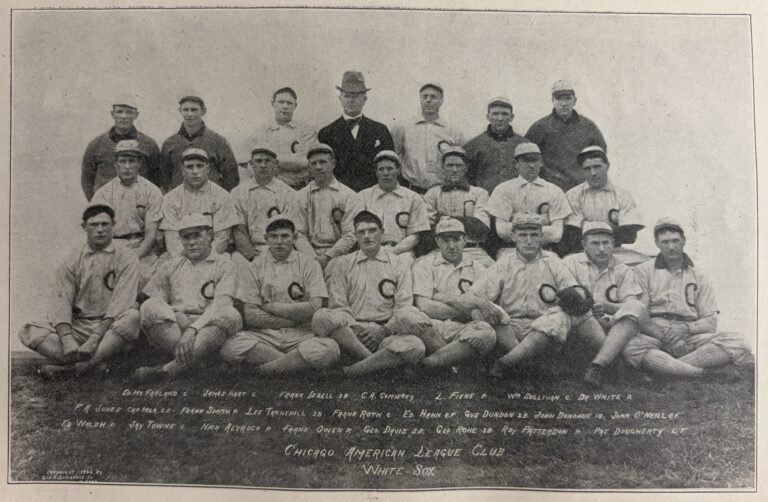
The 1906 Chicago White Sox team photograph from Sox and Cubs by W. A. Phelon, GV875.C2 P5. Sox owner Charles A. Comiskey stands in the middle of the back row. Photograph by McGraw-Traster and Marr
By the late afternoon of October 9, the Sox had proved they could hold their own against the Cubs, defeating them 2–1. The Cubs demolished the Sox in Game Two 7–1 amid more snow flurries and below-freezing temperatures. Only 12,595 rooters shivered at the Sox home field, South Side Park, to watch this contest. Game Three went 3–0 with the Sox winning. In this contest, Sox batter Ed Hahn took a pitch directly in the face, breaking his nose. To assist Hahn, the umpire called in two rooters from the stands who happened to be doctors.
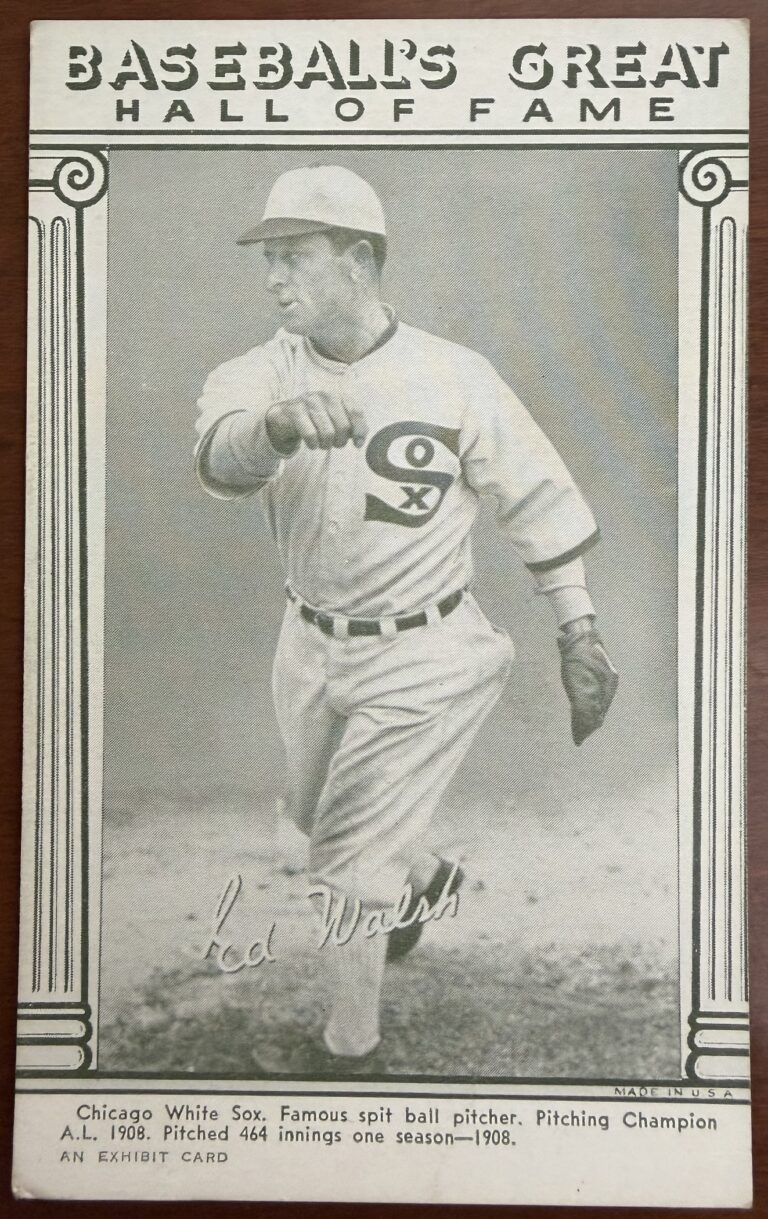
An undated baseball card featuring Chicago White Sox pitcher Ed Walsh. Famous for his spitball that one opponent claimed seemed to “disintegrate on the way to the plate,” Walsh won both of his starts in the 1906 World Series. Photograph by McGraw-Traster and Marr
Game Four at South Side Park evened the series at two games apiece with the Cubs winning 1–0. The Sox surged ahead once again in Game Five, emerging victorious 8–6. At this point, with the Sox ahead three games to two in the seven-game series, nearly everyone in town was talking about the ongoing matchup. However, Chicago Tribune editors deemed one man’s lack of knowledge of the World Series shocking enough to deserve a two-page spread. Ulrich Schulte, a 35-year-old German immigrant grocer, received the moniker “the most unusual man in Chicago, perhaps the freakiest man in America.” To the journalist’s surprise, Schulte reportedly did not know anything about the World Series, the Sox, the Cubs, or baseball.
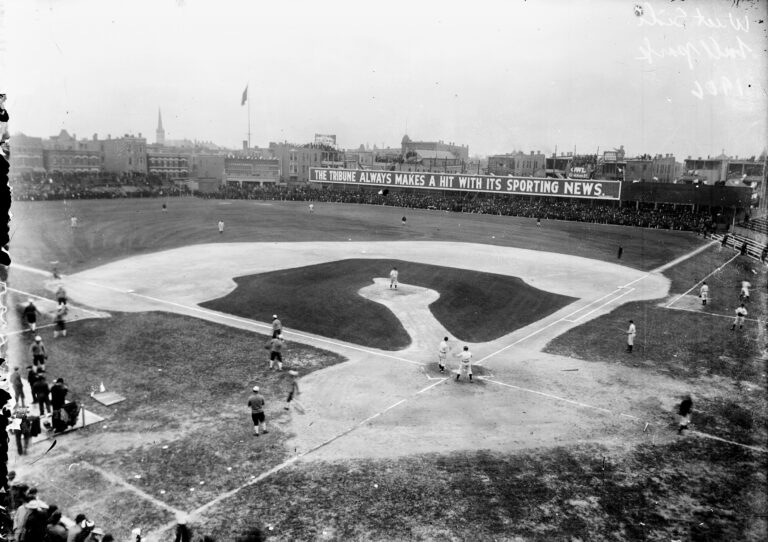
The Chicago Cubs’ West Side Grounds, Chicago, 1906. SDN-004890, Chicago Daily News collection, CHM
On the day of Game Six, rooters began lining up hours ahead of the scheduled 2:30 p.m. first pitch. According to one report, the first ticket buyer arrived at South Side Park at 2:00 a.m. When the gates finally opened at noon, 19,249 rooters rushed inside while thousands were left outside. By 12:30 p.m., the gates closed because the stadium had already reached capacity, two hours before the first pitch was scheduled to be thrown. Chicago police controlled the throngs outside, as they pushed against the wooden fences trying to force their way into the ballpark.
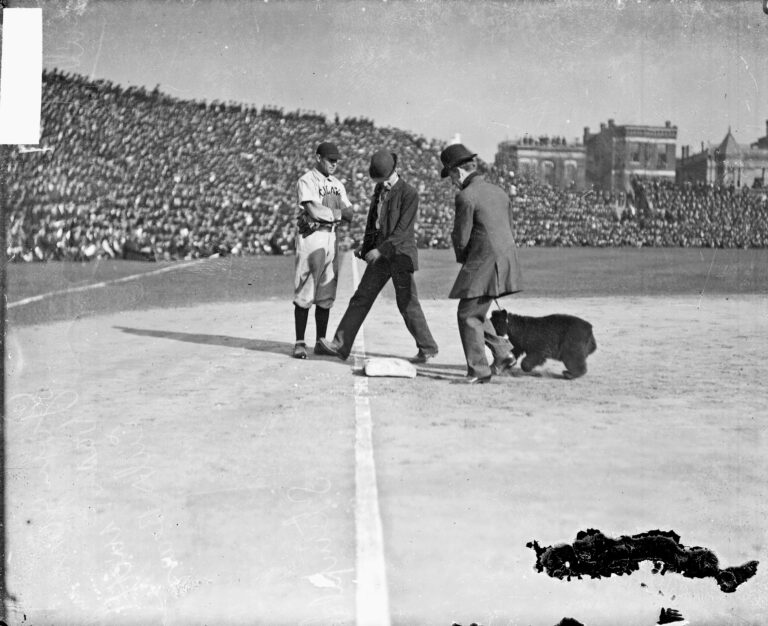
Two men lead a bear cub past third base, West Side Grounds, Chicago, 1906. At Game 6, two bear cubs were brought from the Lincoln Park Zoo and another two from Riverview Park. SDN-052235, Chicago Daily News collection, CHM
Four live bear cubs attended the game. Some rooters inside the park shouted play-by-play updates to those still waiting outside. One man climbed a tall pole to watch the game and recounted each play via megaphone to the rest of the crowd. The White Sox took the lead in the first inning, increased it in the second, and maintained it throughout the rest of the game, ultimately winning 8–3, taking the World Series 4 games to 2.
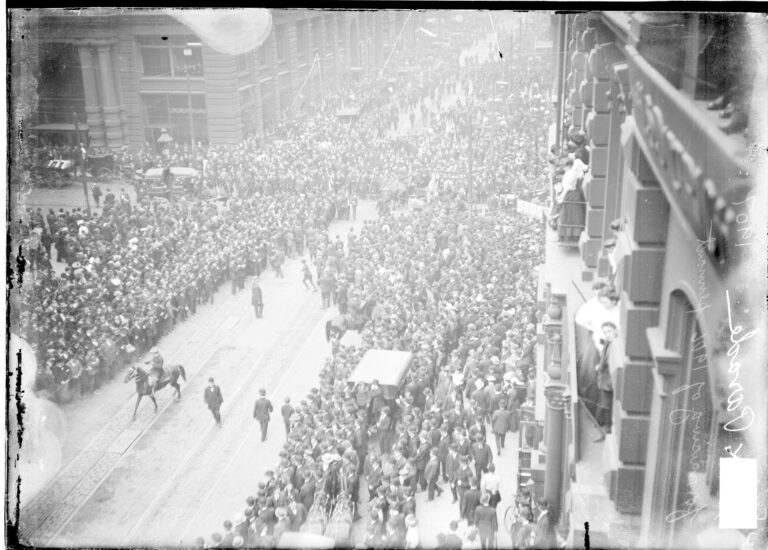
The White Sox World Series victory parade in the Loop, Chicago, 1906. SDN-005845, Chicago Daily News collection, CHM
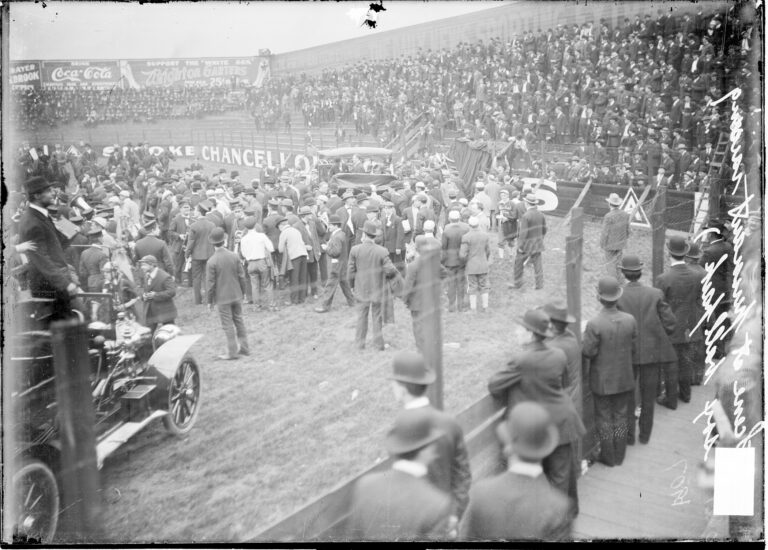
White Sox rooters celebrate the raising of the 1906 World Series banner, South Side Park, Chicago, 1907. SDN-005857, Chicago Daily News collection, CHM
While the White Sox and their rooters celebrated the team’s first World Series title, some reporters hastened to find Cubs owner Charles Murphy for a comment. In response to his team’s loss, Murphy proclaimed, “I am for Chicago and will say that Chicago has the two best ball teams in the world . . . Chicago people should be proud of both their clubs. Three cheers for the White Sox!”
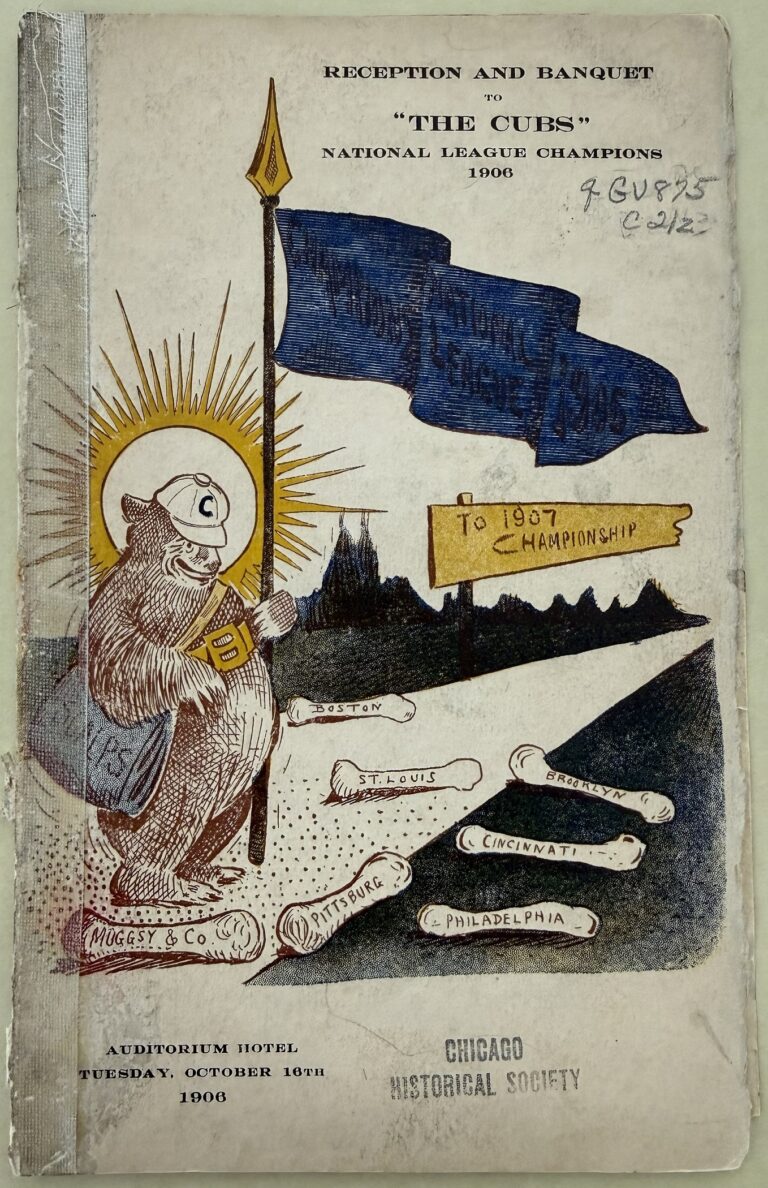
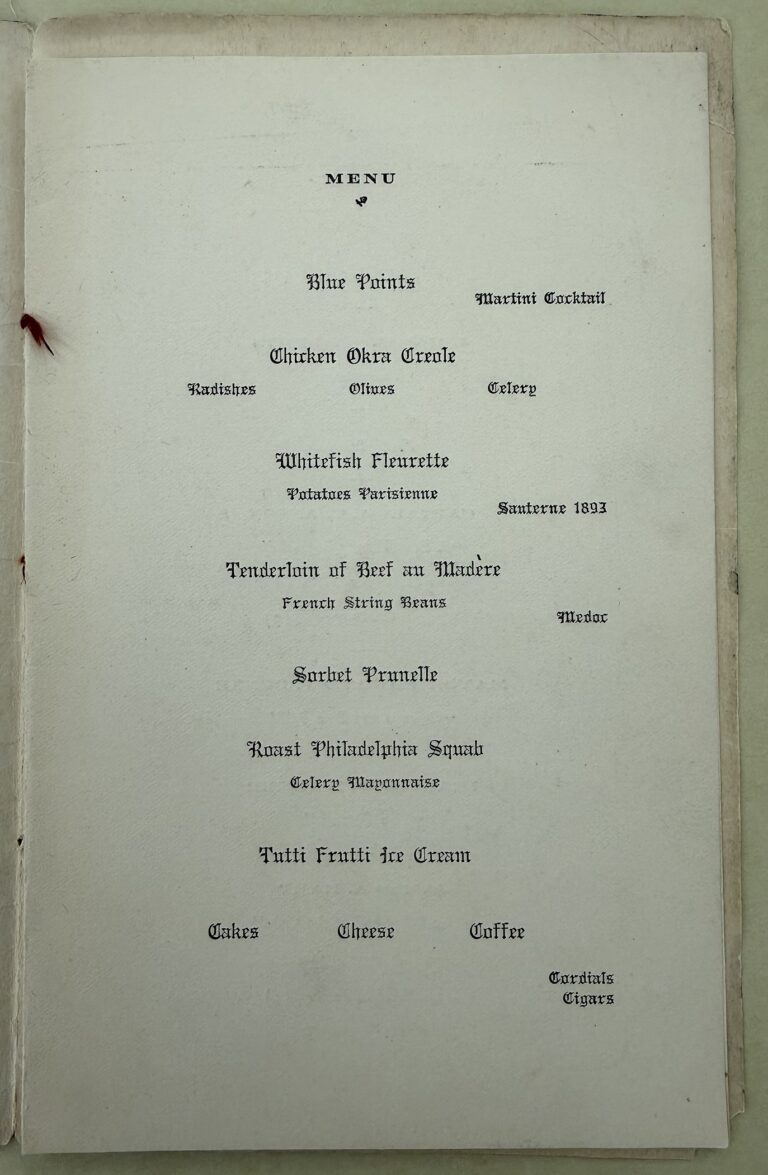
Chicago Cubs reception and banquet program, October 16, 1906. Despite losing the World Series, the Cubs celebrated their National League pennant with a banquet featuring chicken okra creole, whitefish fleurette, tutti frutti ice cream, and post-dinner cigars. Miscellaneous pamphlets, etc., Chicago Cubs GV875 .C21z OVERSIZE. Photograph by McGraw-Traster and Marr
Additional Resources
- Read more blog posts on baseball history
- Chicago Cubs records 1873–1966, bulk 1873–-1893, available at the Abakanowicz Research Center (ARC)
- Chicago White Sox collection 1913–1919, available at the ARC
- Chicago White Sox and 1919 World Series baseball scandal collection 1917–1929, bulk 1920–1924, available at the ARC
- Chicago Cubs image collection at CHM Images
- Chicago White Sox image collection at CHM Images