
As part of our Aquí en Chicago exhibition, which traces the lives of Latino/a/e communities in Chicago, our blog post series by guest authors highlights countries of Latin American heritage. In this post, Dr. Rafael Núñez-Cedeño, Professor Emeritus in Hispanic and Italian Studies at the University of Illinois Chicago, founder and chair of the Dominican-American Midwest Association (DAMA), and an advisor on Aquí en Chicago writes about the history of Chicago’s Dominican community.
Tell us about the Dominican community in Chicago. How big is it? How long have Dominicans lived here?
Chicago may not be the first city people associate with Dominican immigration, but for nearly 60 years, it has been home to a dynamic Dominican community. While Dominican migration to New York began in the 1940s and surged after 1963, Chicago became a significant destination thereafter. As economic conditions in the Dominican Republic continued to deteriorate and job opportunities in New York declined during the 1970s, many Dominicans moved westward. They found new opportunities in Chicago and subsequently contributed to the city’s social, economic, and cultural life.
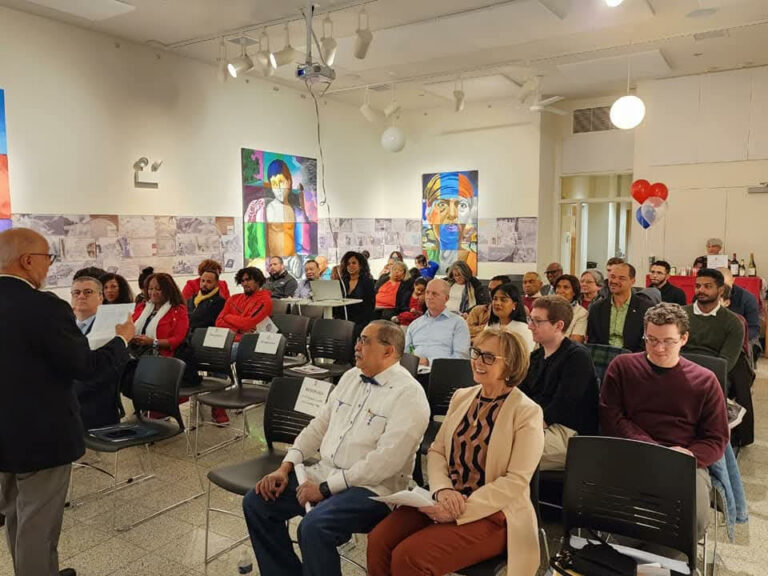
Dominicans celebrating Dominican Independence Day at the Puerto Rican Arts Alliance, February 2024. All photographs courtesy of Rafael Nuñez-Cedeño
According to oral histories and Dominican Consular records, Dominicans found employment across industrial, service, and professional sectors. They often felt welcomed in a city with established Puerto Rican and Cuban communities. Shared Caribbean histories and common cultural traditions eased their integration into Chicago’s northwest neighborhoods, while professionals settled in the suburbs.
Officials failed to count Dominicans in census statistics for many years. They were not identified separately in 1980, but passport records suggest that as many as 4,000 first-generation Dominicans lived in Chicago at the time. Consular estimates today place the population at approximately 7,500.
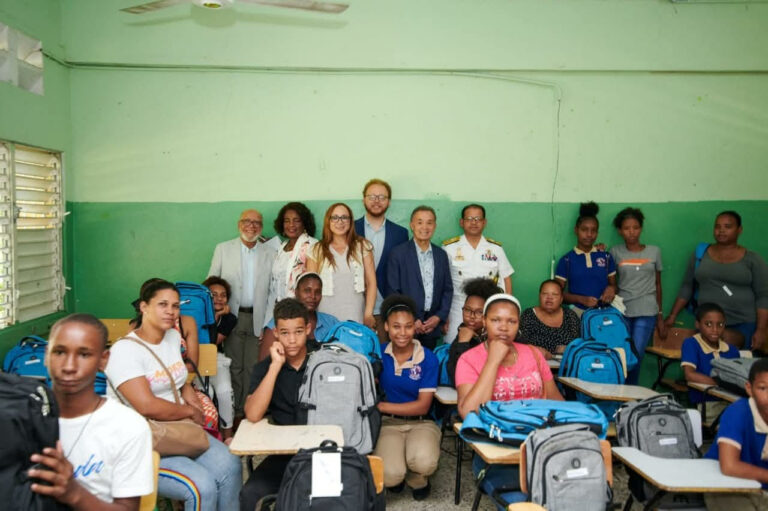
DAMA delivered school supplies and presented financial awards to students in Santo Domingo, June 2024.
The 1990s marked a turning point in community organization and visibility. A group of Dominicans founded Casa Dominicana in 1991, a grassroots organization that promoted culture, history, and identity. In 1998, Cook County Commissioner Roberto Maldonado recognized its impact by sponsoring a resolution honoring the Dominican contribution. Around the same time, the Chicago City Council honored Dominican physician Ramón García-Camilo for his humanitarian service by naming a section of Kedzie Boulevard after him.
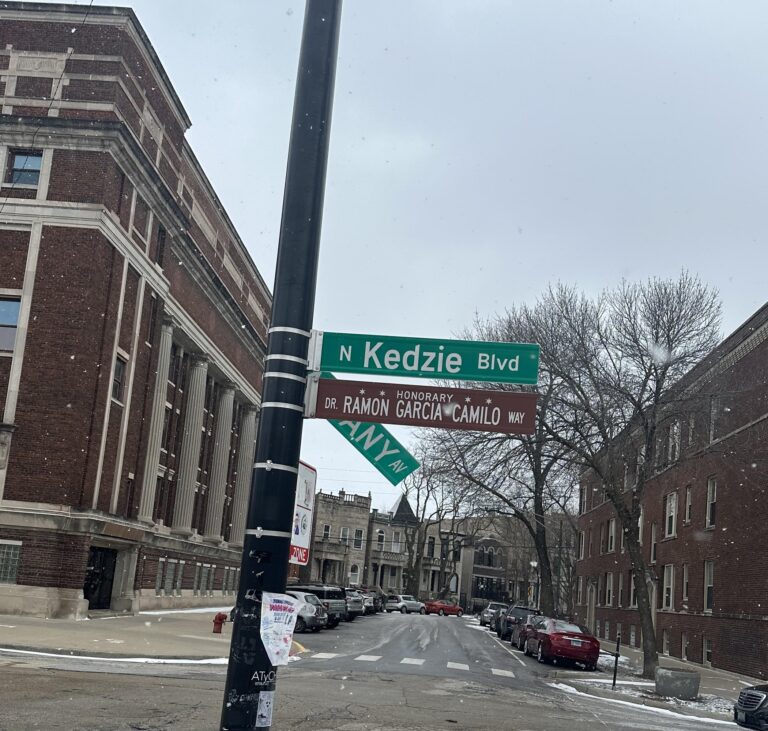
Honorary street named after Dr. Ramon Camilo Garcia, Logan Square, December 2025.
The demise of Casa Dominicana also marked the emergence of professional leadership through the culturally and educationally oriented Dominican American Midwest Association (DAMA) and Unidad Dominicana. The former’s founding board reflected the community’s professional depth and included figures such as Dr. Samuel Castillo, a humanitarian and gastrointestinal specialist; Dr. César Herrera, an expert in cardiac radiology; Dr. Bernadette Sánchez, a clinical psychologist and university professor; Rita Simó, founder of the People’s Music School of Chicago; Kenneth Greene-Vélez, an artistic photographer and the first Dominican elected to public office in Illinois in 2000, Yulissa Nunez-deLeon, a Berwyn’s award-winning school teacher, and Idanes and Rhina Sánchez, community activists.
Is there an activity/location related to the Dominican community that every Chicagoan should experience?
With DAMA leadership, cultural expression flourished alongside civic engagement. In the late 1990s and beyond, Dominican folklore, merengue music, and visual arts were introduced to Chicago’s museums, schools, libraries, and parks. Mi Galería, founded by surgeon Dr. Rafael Pérez Guerra, became the city’s first space dedicated to Dominican artists and sculptors.
Entrepreneurship further anchored the community, as Dominicans opened agencies, beauty salons, automotive shops, construction firms, appliance stores, restaurants, and nightclubs—creating jobs and contributing to Chicago’s small-business economy. Many of these establishments also became cultural gathering spaces.
Is there a food/meal/dish related to the Dominican community that every Chicagoan should try?
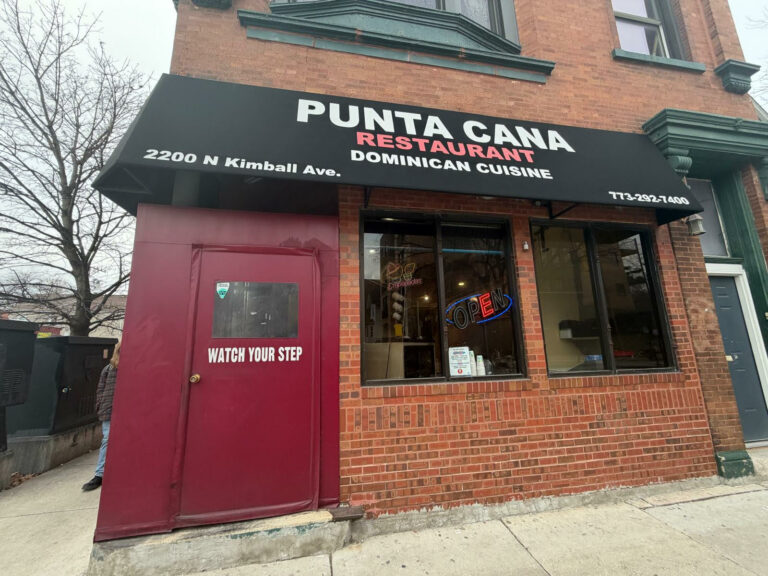
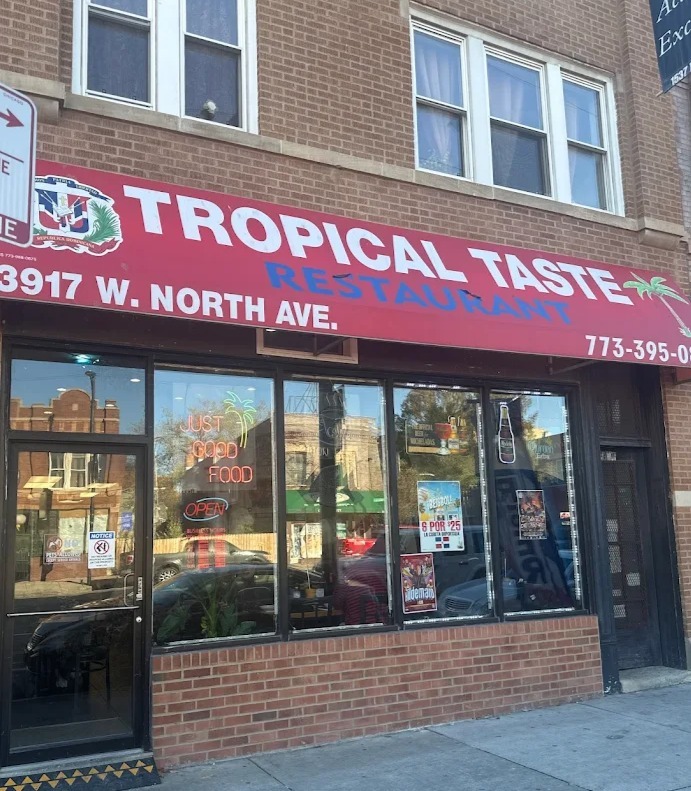
Punta Cana and Tropical Taste restaurants in the Logan Square community area, November 2025.
To enjoy an authentic Dominican culinary experience, visitors can sample la Bandera Dominicana, the national staple of rice, beans, and meat; los tres golpes, featuring mangú with fried eggs, cheese, and salami; or a hearty sancocho, a traditional stew made with a variety of roots and meats. In the Humboldt Park area, several restaurants offer these classic dishes, including Punta Cana and Tropical Taste The experience often continues with music and dance at LV Night Club, a popular venue for lively merengue and bachata rhythms.
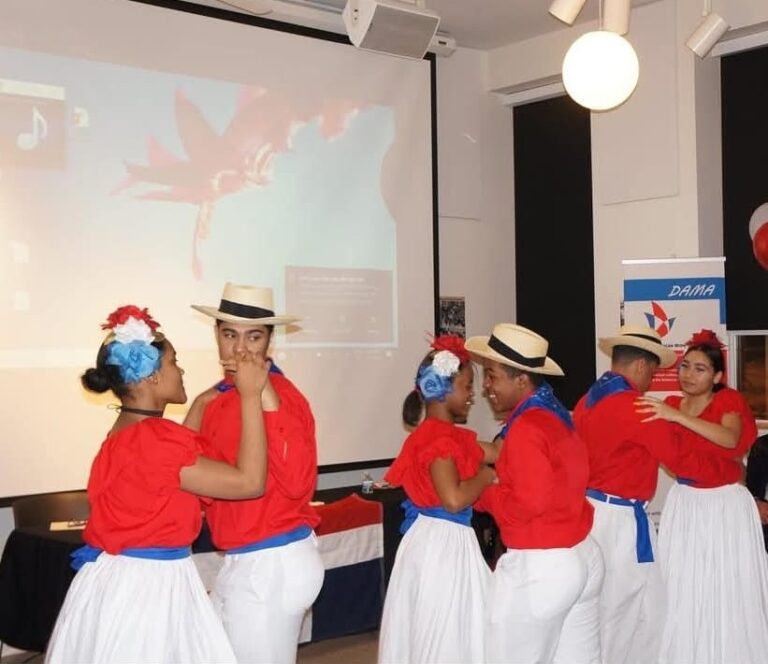
Dominicans perform merengue at the Puerto Rican Arts Alliance, February 2018.
Is there a prominent person in the Dominican community you would like to highlight?
In medicine, professionals such as Drs. Max Brito, Ramón García (a Chicago Cultural Alliance honoree), and Frank Morales have made lasting contributions. Others, including corporate leaders Pedro de Jesús, José Colón, and Alexandra Nelson, rose to top executive positions in finance and mortgage lending.
Today, the Dominican community in Chicago exemplifies strength, cultural pride, and transnational connections.