

[Ed. note: This blog post was originally published on December 2, 2014, and has been updated with additional resources.]
Curator Petra Slinkard and intern Claire Arnold explore the Chicago origins of Rudolph the Red-Nosed Reindeer.
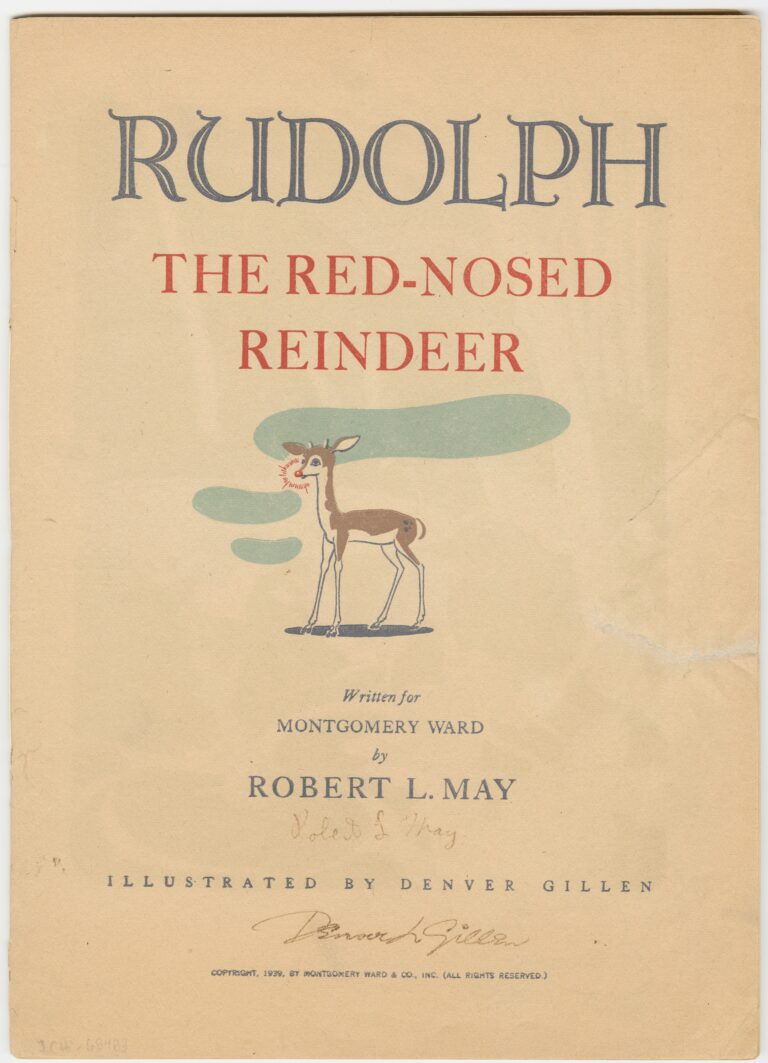
Cover of an original Rudolph the Red-Nosed Reindeer written for Montgomery Ward & Co. by Robert L. May and illustrated by Denver Gillen, 1939. PZ8.3.M4525 R5 1939 HIXON. CHM, ICHi-68483
While it may seem like he’s always led Santa’s sleigh, Rudolph the red-nosed reindeer first appeared in 1939 in Chicago. That year, Montgomery Ward & Co. began distributing complimentary copies of the illustrated poem to children who visited their stores during the holiday shopping season. Rudolph’s creator was an advertising copywriter named Robert Lewis May who was tasked with creating a character for the promotional giveaway. May later explained that he had an “ugly duckling” type of plot in mind when he developed his tale of the much-teased reindeer who saves the day with his glowing nose. Ward was initially apprehensive about the concept because of the association between red noses and drunkenness, but May insisted that children would relate to the unlikely hero. After considering Rollo and Reginald as possible names, May decided on Rudolph, and the famous reindeer soon sprung off the page into Christmas lore.
Robert May was right about the compelling nature of his story. In the 1939 holiday season alone, Ward distributed roughly 2.4 million copies at stores across the country and after wartime paper shortages ended in 1946, Rudolph returned to its previous success. Meanwhile, Ward capitalized on Rudolph’s popularity and sold toys, clothing, and other Rudolph-related items. In 1947, Ward released the copyright for Rudolph to May, who finally began receiving royalties for his work. May benefited greatly from his creation, often referring to his home in Evanston as “the house that Rudolph built” and crediting Rudolph for putting his six children through college.
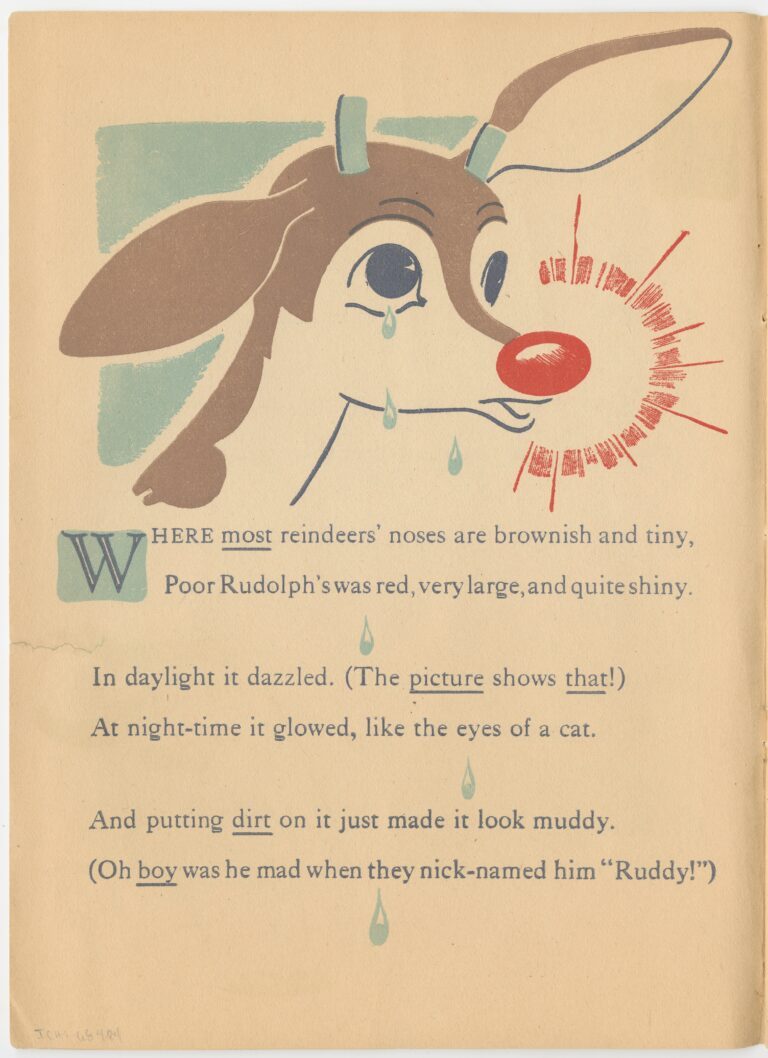
Rudolph crying and his nose shining. From the Museum’s original copy. CHM, ICHi-68484
Since the publication of the poem, Rudolph has crossed genres to star in a song and two animated Christmas specials, as well as a sequel written by May in 1954, Rudolph the Red-Nosed Reindeer Shines Again. He’s become such a Christmas mainstay that many people have forgotten his commercial origins. However, Montgomery Ward & Co. continued to use Rudolph through the 1990s in advertising and promotional material, as well as field inquiries about his origin.
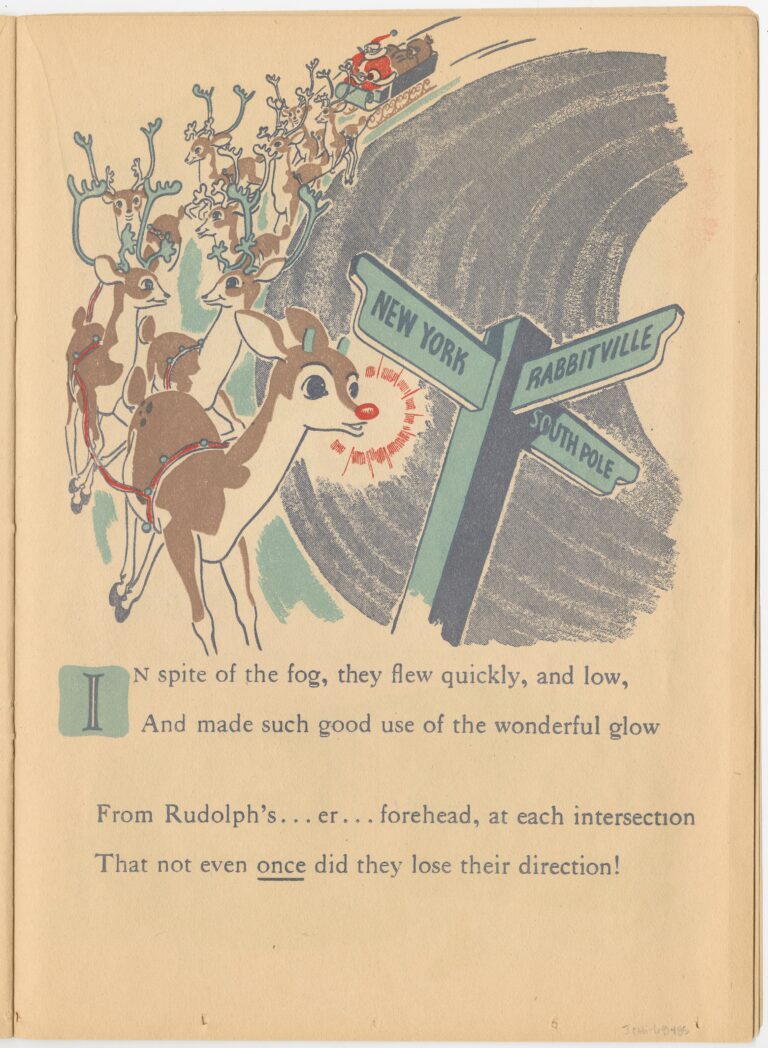
In May’s story, Santa delivers presents to the good animals as well as good children and discovers Rudolph and his unusual feature when filling his stocking. Illustration of Rudolph the red-nosed reindeer leading Santa’s sleigh. From the Museum’s original copy. CHM, ICHi-68485
Amongst information about use and advertising campaigns, the Rudolph section of the Montgomery Ward & Co. records at the Museum includes a bundle of letters from a curious second-grade class in California in 1983.
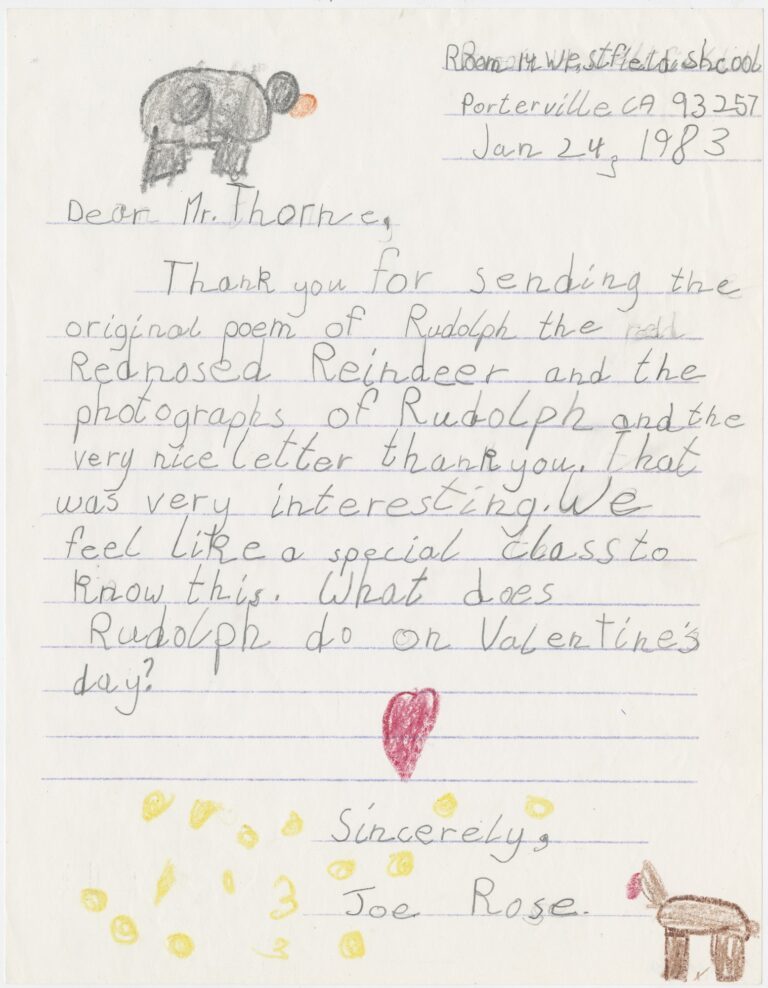
“What does Rudolph do on Valentine’s day?” Letter dated January 24, 1983 from Joe Rose to Chuck Thorne, media relations manager for Ward, regarding Rudolph the Red-Nosed Reindeer. Joe included a drawing of Rudolph. ICHi-68478
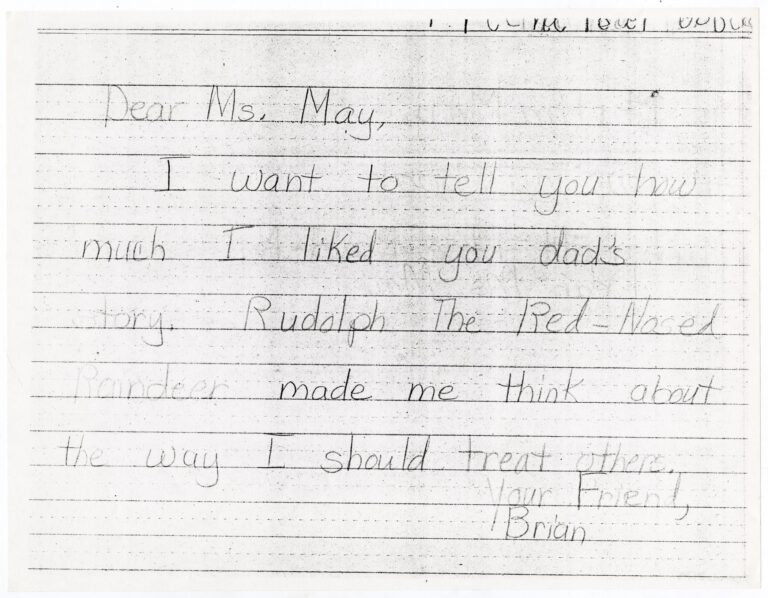
“I liked you [sic] dad’s story.” Photocopy of a letter from a young boy, Brian, to Barbara May regarding Rudolph the Red-Nosed Reindeer, written sometime between 1970 and 1990. CHM, ICHi-68479
Additional Resources
- Peruse the contents of the Montgomery Ward & Co. records, 1872–2000
- Learn more about Montgomery Ward & Co.
- Watch Rudolph the Red-nosed Reindeer: With Christmas greetings from Montgomery Ward, archived in the Library of Congress