

CHM research center associate Annika Kohrt writes about theater, music, opera, and dance performance programs available to visitors in the Chicago History Museum’s Abakanowicz Research Center.
Theater in the fledgling town of Chicago began in the 1830s at the Sauganash Tavern. This is represented in the Chicago History Museum’s oldest exhibition: the Dioramas. What many don’t know is that you can also view and (gently) handle primary materials from Chicago’s long theater history.
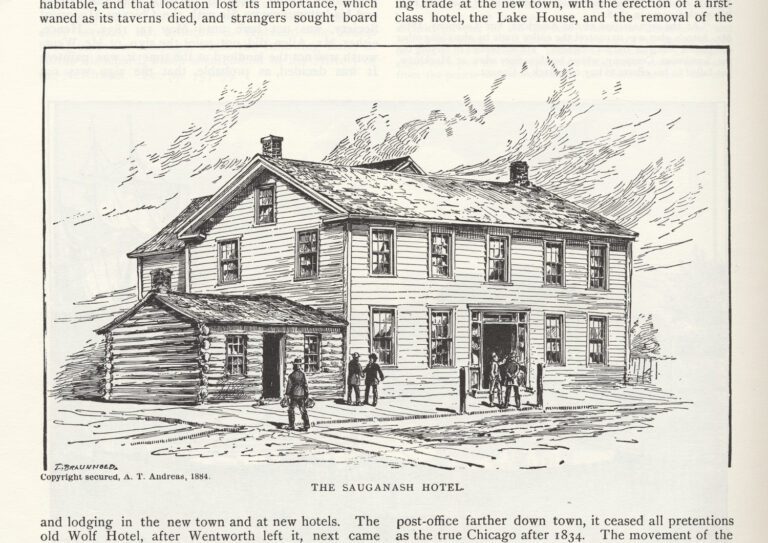
Illustration of the Sauganash Hotel in History of Chicago by Alfred Theodore Andreas, 1884–86. F38B .A5 OVERSIZE, v.1, p. 474. CHM, ICHi-000755
In the Abakanowicz Research Center (ARC), which is accessible for free upon registration at the Ticket Desk, you can view the ledgers from the Tavern’s operation. Original letters describing the tavern are also available for viewing.
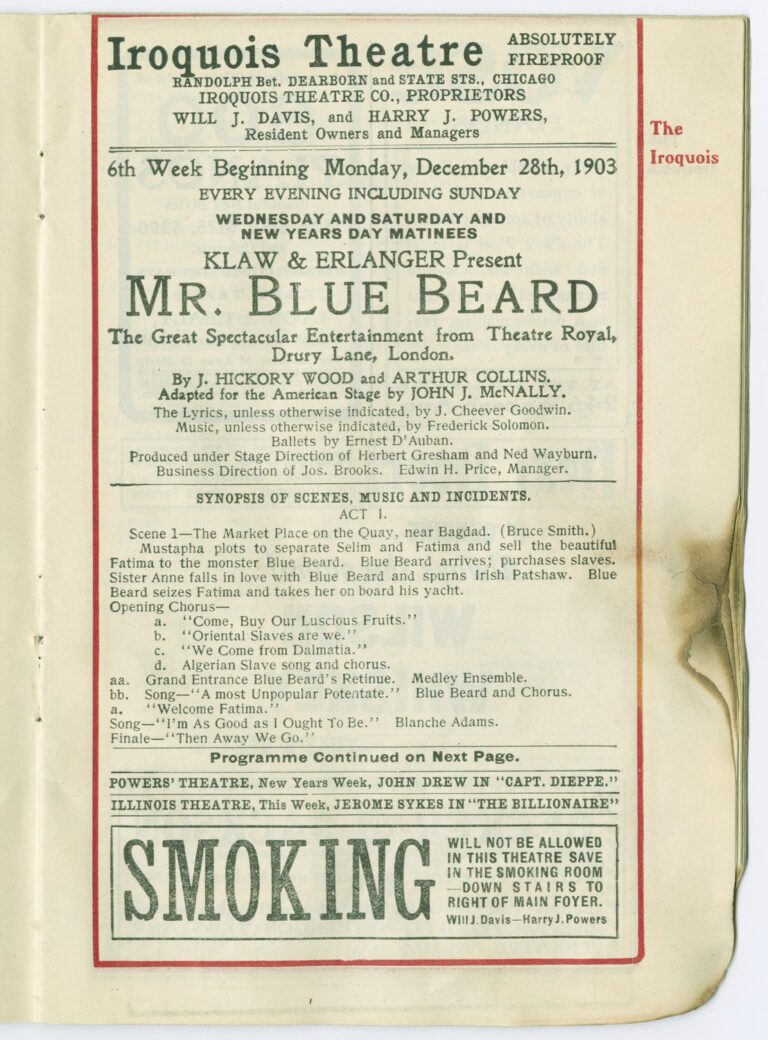
A singed program for the Iroquois Theatre advertising Mr. Blue Beard, Chicago, December 1903. CHM, ICHi-034981
While you’re in the ARC, you’ll want to check out our newly expanded collection of performance programs. We have programs from the last performance at the Iroquois Theatre, more than 600 programs from Ravinia Festival events (starting as early as 1905), and programs from as recent as last month. Our oldest program is from North’s National Theatre in 1857, where ticket prices range from 25 cents to $6 for a private box:
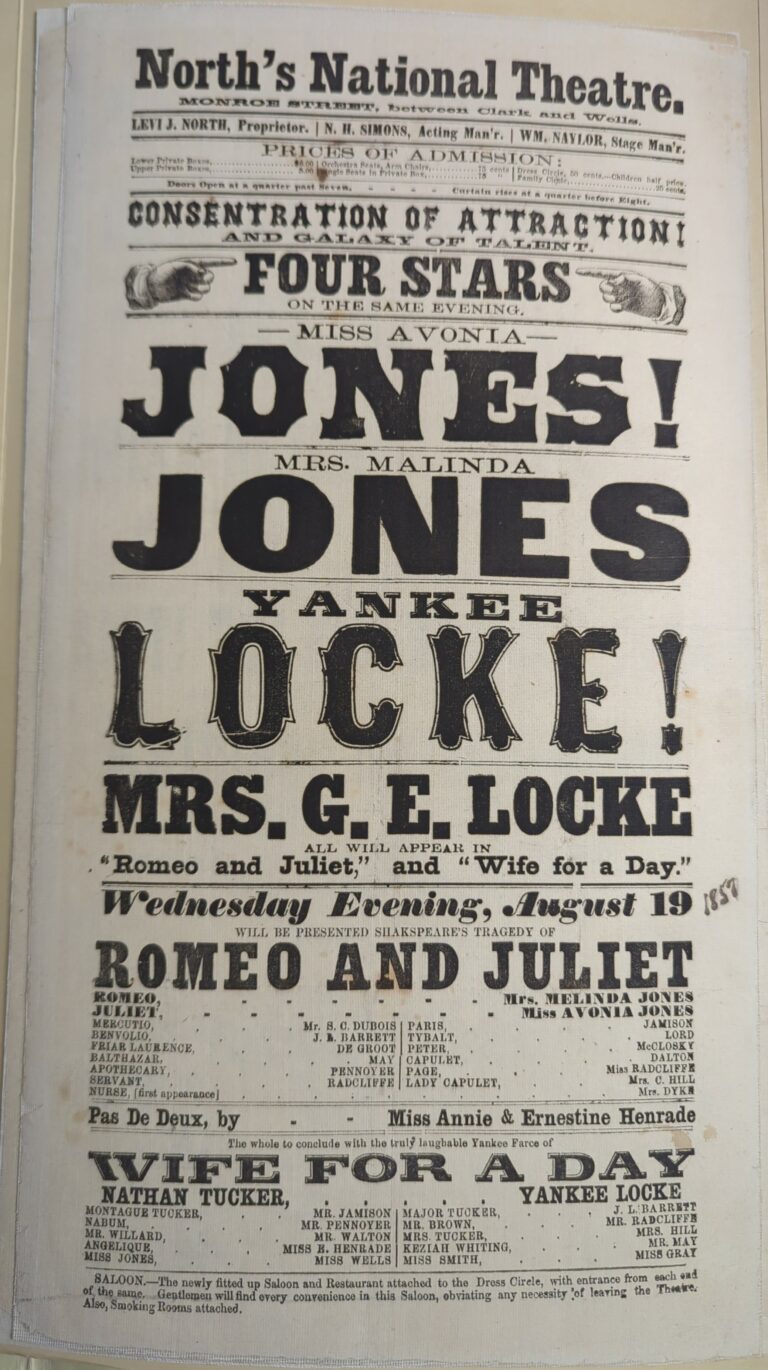
North’s National Theatre playbill for Romeo and Juliet and Wife for a Day, 1857. Theater Programs collection, PN2277 .C42 OVERSIZE. Photograph by CHM staff
Since the late 19th century, Chicago has been a player on the national stage. Theaters hosted dance, music, opera, and vaudeville among the Shakespeare plays, and they produced a range of beautiful, funny, and strange programs to promote them.
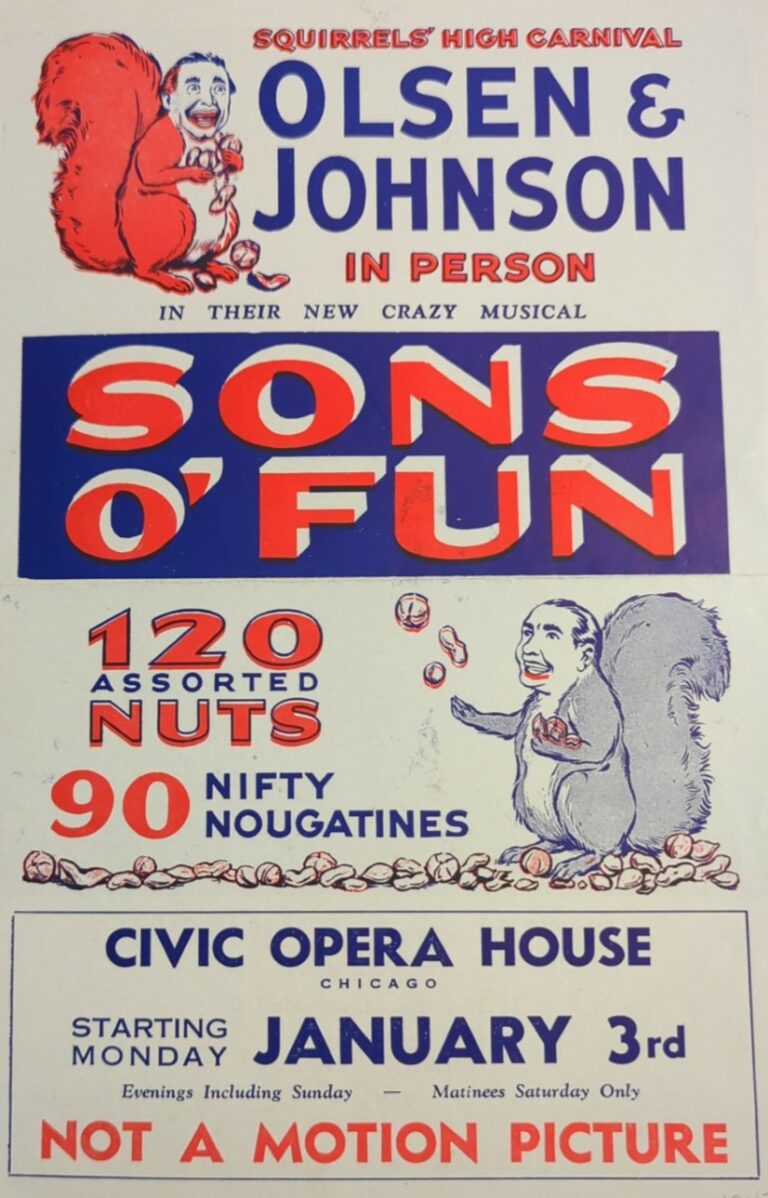
Program for Sons o’ Fun at the Civic Opera House, including graphics of human heads on squirrels, date unknown. Theater Programs collection, PN2277 .C42 OVERSIZE. Photograph by CHM staff
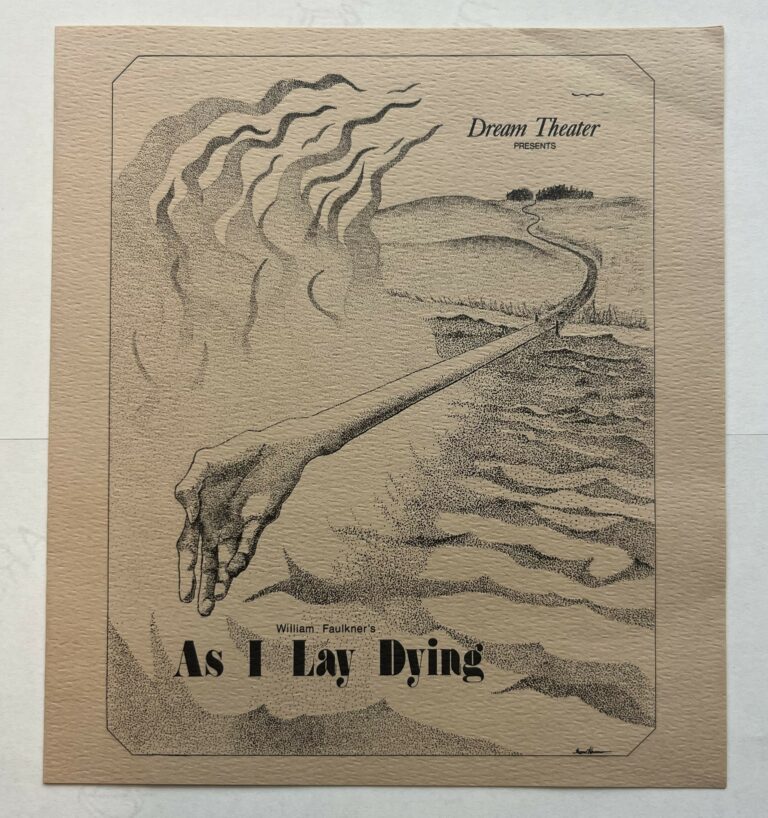
Dream Theater program for As I Lay Dying, date unknown. Theater Programs collection, PN2277 .C42 OVERSIZE. Photograph by CHM staff
Much like our collection of menus, this collection showcases the evolution and innovation of printers in Chicago: some bills are silk, some leather, and many in unexpected formats and sizes—and not only can you look at them, but you can also page through them in the ARC. Artists, novelists, and graphic designers consult this beautiful collection for inspiration. You might use this collection to imagine yourself going out in the Loop in the 1880s, and you’ll certainly have to giggle at some of the products hawked in these pages.
If your interest in Chicago theater history is awakened by this physical history, librarians in the ARC can also help direct you to collections from around the city to answer your questions and delight your mind: for example, the University of Chicago has a Chicago Drama Performances Index, a record of almost every theatrical performance in Chicago theaters from 1839 to 1955.
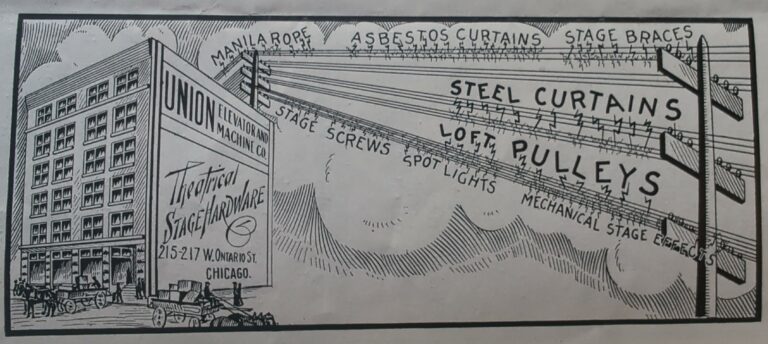
Theatrical Stage Hardware advertisement, including asbestos curtains, from the program for The Strollers Revel at the Studebaker Theatre, May 7, 1915. Theater Programs collection, PN2277 .C42 OVERSIZE. Photograph by CHM staff
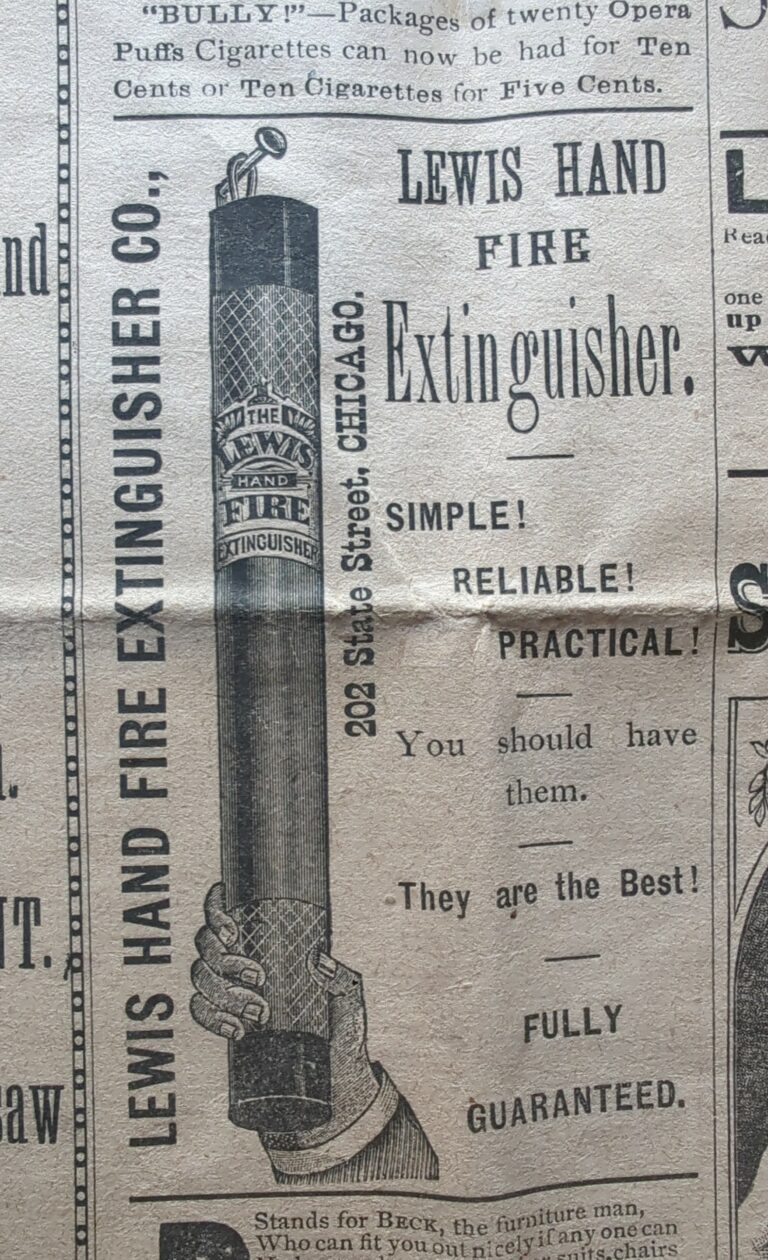
Hand fire extinguisher advertisement from Rose Eytinge in Felicia at the Standard Theatre, date unknown. Theater Programs collection, PN2277 .C42 OVERSIZE. Photograph by CHM staff
Genealogists also search through these for treasures: you might find your great-aunt in a high school production cast list, and the advertisements inside would tell you about her whole neighborhood!
How have Second City programs changed since the 1960s? What operas did the Kungsholm Miniature Grand Opera Theatre perform? Who performed at the Pekin Theatre, the first Black-owned musical theatre in the United States, in 1908? You’ll have to visit the ARC to find out!
Additional Resources
- Peruse our LibGuide for Performance Programs
- View our Google Arts & Culture story “The Lyric Opera of Chicago’s World Premiere of Amistad”
Books on Chicago Theater History
- Richard Christiansen, A Theater of Our Own: A History and a Memoir of 1,001 Nights in Chicago
- Thomas Bauman, The Pekin: The Rise and Fall of Chicago’s First Black-Owned Theater