

The Haymarket Affair
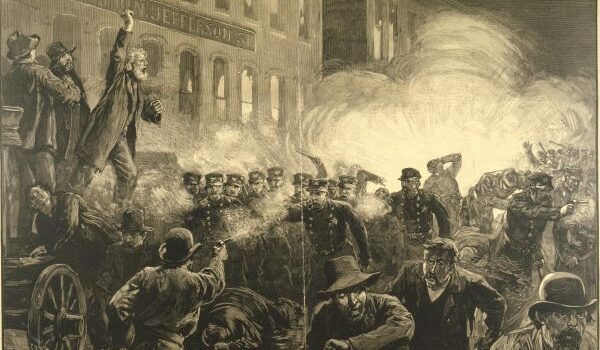
On May 1, 1886, Chicago unionists, reformers, socialists, anarchists, and ordinary workers combined to make the city the center of the national movement for an eight-hour day.
Between April 25 and May 4, workers attended scores of meetings and paraded through the streets at least 19 times. On Saturday, May 1, 35,000 workers walked off their jobs. Tens of thousands more, both skilled and unskilled, joined them on May 3 and 4. Crowds traveled from workplace to workplace urging fellow workers to strike. Many now adopted the radical demand of eight hours’ work for ten hours’ pay. Police clashed with strikers at least a dozen times, three with shootings.
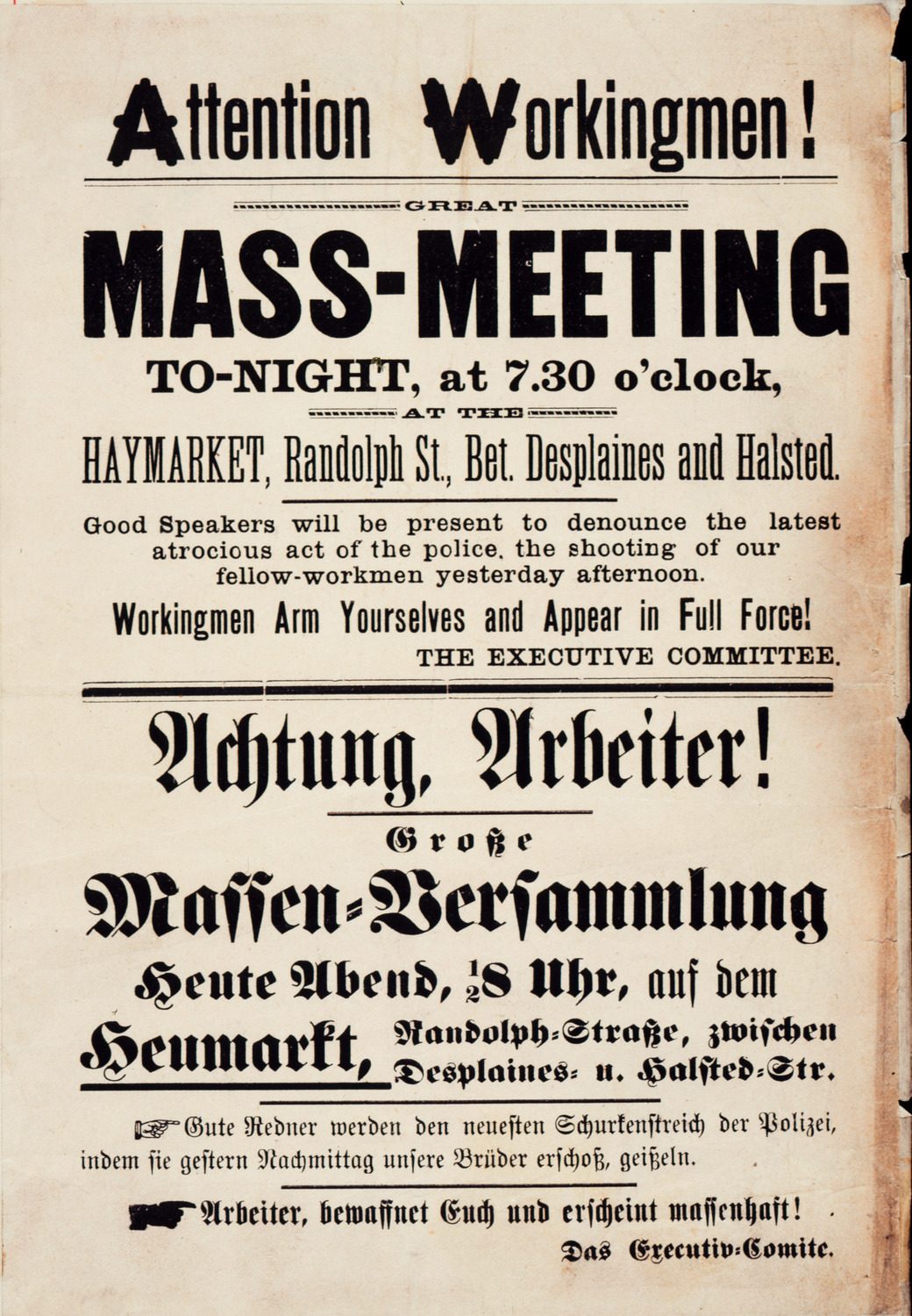
At the McCormick reaper plant, a long-simmering strike erupted in violence on May 3, and police fired at strikers, killing at least two. Anarchists called a protest meeting at the West Randolph Street Haymarket, advertising it in inflammatory leaflets, one of which called for “Revenge!”
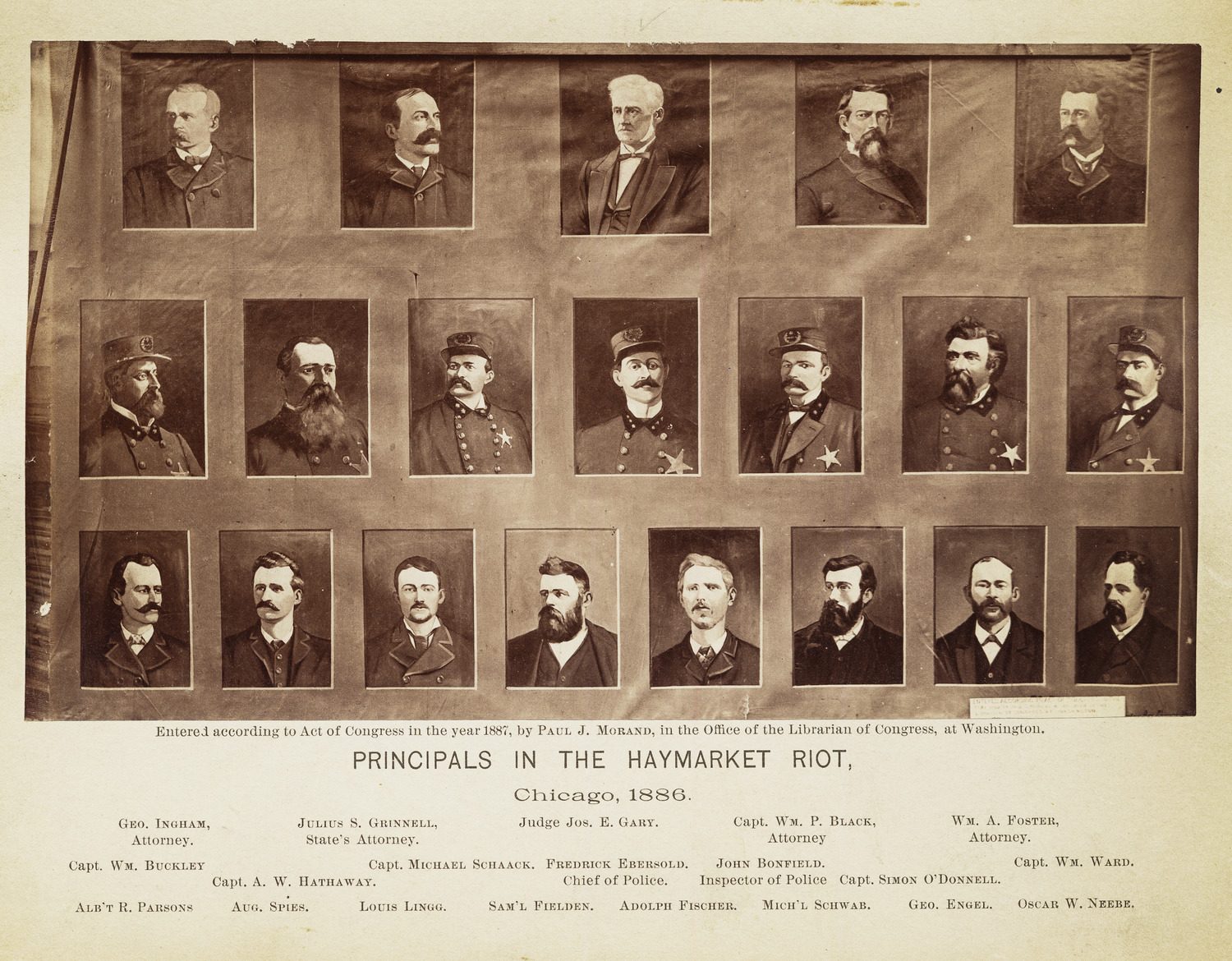
The crowd gathered on the evening of May 4 on Des Plaines Street, just north of Randolph, was peaceful, and Mayor Carter H. Harrison, who attended, instructed police not to disturb the meeting. But when one speaker urged the dwindling crowd to “throttle” the law, 176 officers under Inspector John Bonfield marched to the meeting and ordered it to disperse.
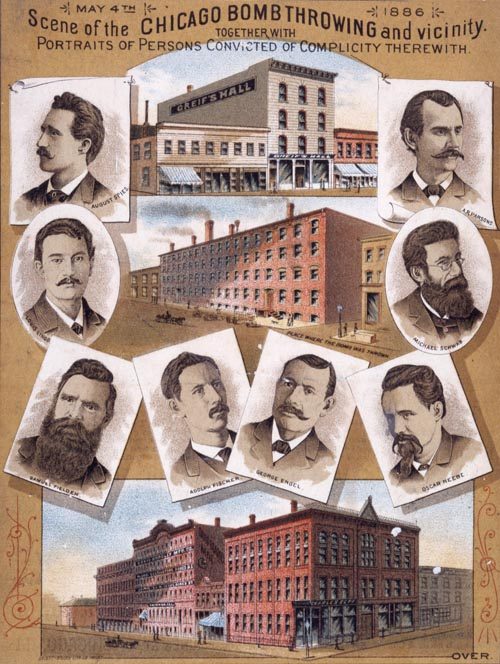
Then someone hurled a bomb at the police, killing one officer instantly. Police drew guns, firing wildly. Sixty officers were injured, and eight died; an undetermined number of the crowd were killed or wounded.
Blog Posts and Chicago History Magazine Articles
Explore Haymarket more in depth from scholars, historians, activists, and educators.
Learning Resources
Exhibitions
Studs Terkel Radio Archive
- Bill Adelman, Paul Avrich, Carolyn Ashbaugh, and Bill Neebe discuss the Haymarket Square Riot
- Win Stracke, Bill Adelman, and Bill Neebe discusses May Day and the Haymarket Square Riot
- Discussing the book “The Haymarket Tragedy,” with the author, historian Paul Avrich
- Carl Smith discusses his book “Urban Disorder and the Shape of Belief: the Great Chicago Fire, the Haymarket Bomb, and the Model Town of Pullman”
- Irwin St. John Tucker and Carolyn Ashbaugh discuss labor history and Lucy Parsons
- Harry Barnard talks about the Haymarket anarchists, the Pullman labor strike, and the life of Illinois governor John Peter Altgeld
- Sidney Lens discusses his book “The Labor Wars”
Encyclopedia of Chicago
- Haymarket and May Day
- Anarchists
- Eight-Hour Movement
- Politics and the Press
- Socialist Parties
- Strikes
Abakanowicz Research Center Materials
- Illinois vs. August Spies et al. Haymarket Affair trial transcript collection [manuscript], 1886-1887
- The anarchists’ cases: brief for the defendants / Leonard Swett
- Albert R. Parsons papers [manuscript], 1886-1887, 1930
- William Dean Howells’s unpublished letters about the Haymarket affair
Visit the Abakanowicz Research Center
The Haymarket Digital Collection
This digital collection provides online access to CHM’s primary source materials relating to the Haymarket Affair, a controversial moment in Chicago’s past and a pivotal event in the early history of the American labor movement.
For an in-depth analysis of the history of the Haymarket Affair, visit The Dramas of Haymarket, an affiliated, interpretive web site developed in cooperation with Northwestern University to examine the Haymarket events and their significance for both contemporaries and later audiences.
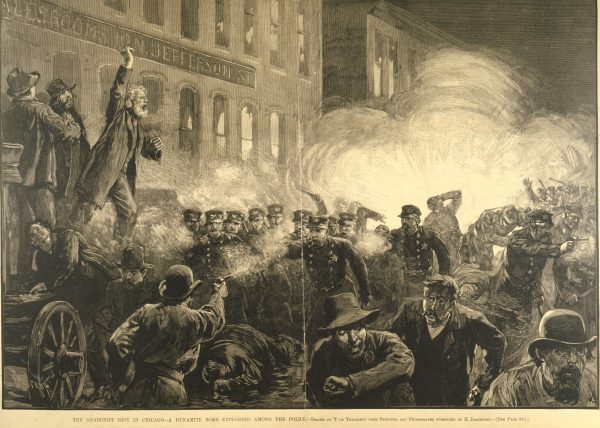
Photo selection from CHM’s image resources