

Each year, the tradition of Las Posadas is observed by the Latino/a/e communities from December 16 to 24. In this blog post, CHM curator of religion and community history Rebekah Coffman writes about the Mexican origins of Las Posadas and how it has been celebrated in Chicago.
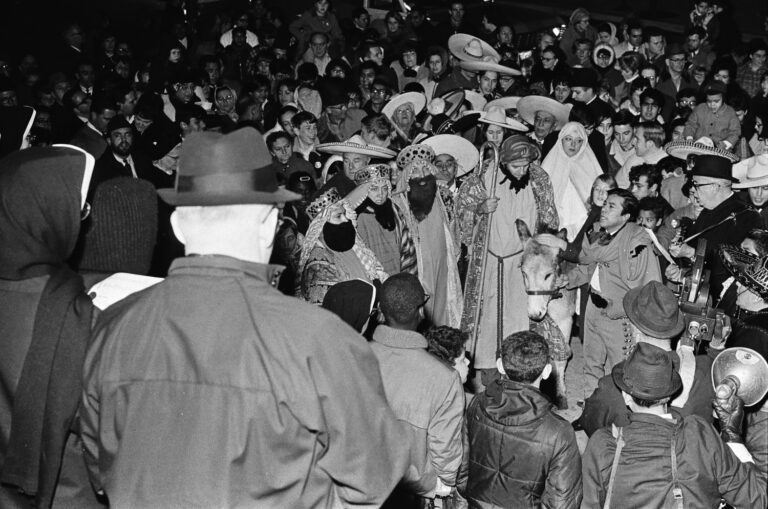
Members of Chicago’s Mexican community celebrate their 9th annual Posada, December 19, 1967. CHM, ST-14002227-0003, Chicago Sun-Times collection
From December 16 to 24, Latine communities celebrate Las Posadas, a nine-day celebration and time of remembrance leading up to Christmas. Most closely associated with Mexico and the Mexican diaspora in the United States, Posadas originated in Mexico City in the 16th century through the influence of Spanish Catholic missionaries.
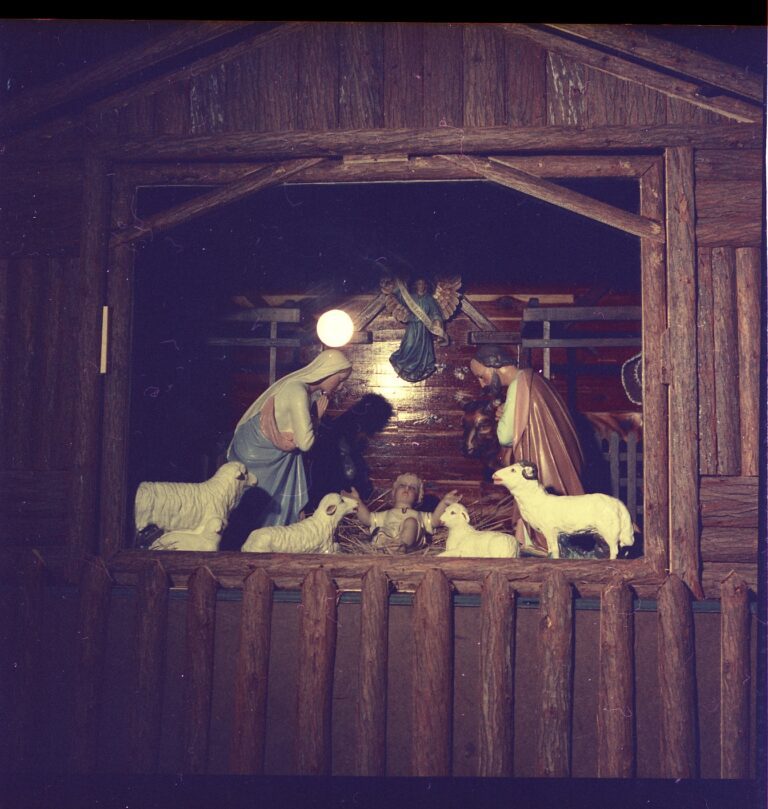
Creche in a wooden stable, with Mary, Joseph, and the Baby Jesus and some sheep, c. 1954. Vivian Maier, photographer. CHM, ICH-180071
“Posada” means “inn” or “accommodation” in Spanish. In the Christian Bible’s Christmas story, Joseph and Mary made a journey to Joseph’s hometown, Bethlehem, where Jesus would be born. Upon arrival, they struggled to find a place to sleep for the night, or as the Bible verse Luke 2:7 says, “there was no guest room available for them,” and so Mary and Joseph instead stayed in a place for animals where Jesus was born.
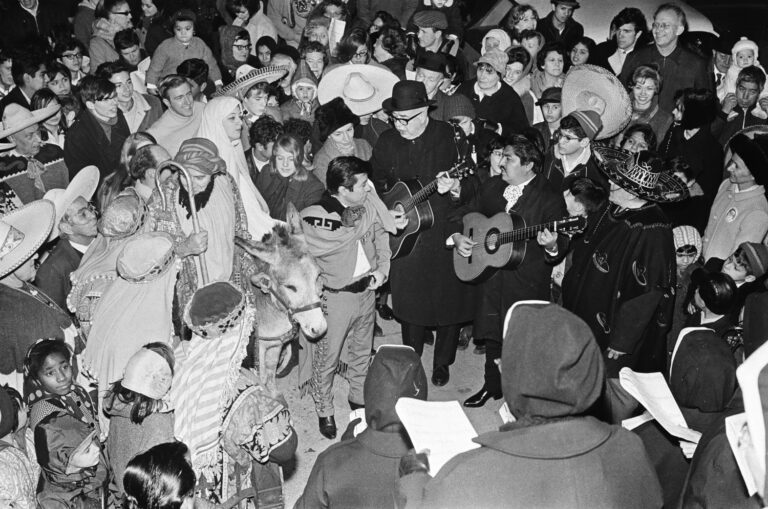
Members of Chicago’s Mexican community celebrate their 9th annual Posada, December 19, 1967. CHM, ST-14002227-0002, Chicago Sun-Times collection
The Posadas are based on Mary and Joseph’s search that night for a place to sleep. The nine days of the celebration symbolize the nine months of Mary’s pregnancy and are part public procession, part Christmas pageant/play. Two individuals dress up as Mary and Joseph, and a procession goes from house to house that are assigned to act as “inns.” People sing songs along the way, including songs like Los Santos Reyes, a kind of call and response between those asking for shelter and those denying accommodation, until the final stop welcomes them in as pilgrims. The celebration ends with sharing food and a hitting a piñata, usually star-shaped, which can serve as a sign of faith and hope like the star of Bethlehem or a symbol of sin and temptations that are struggled against leading up to Jesus’s birth.
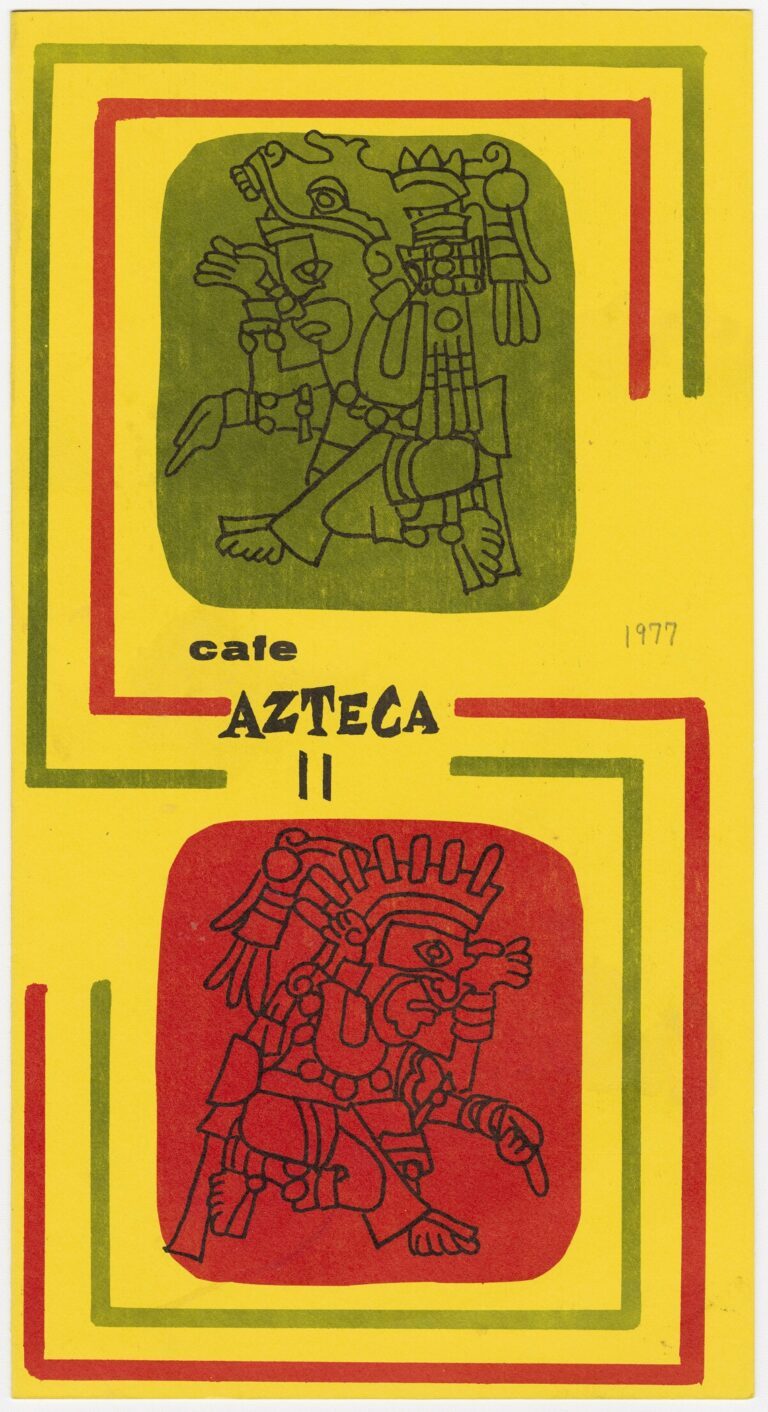
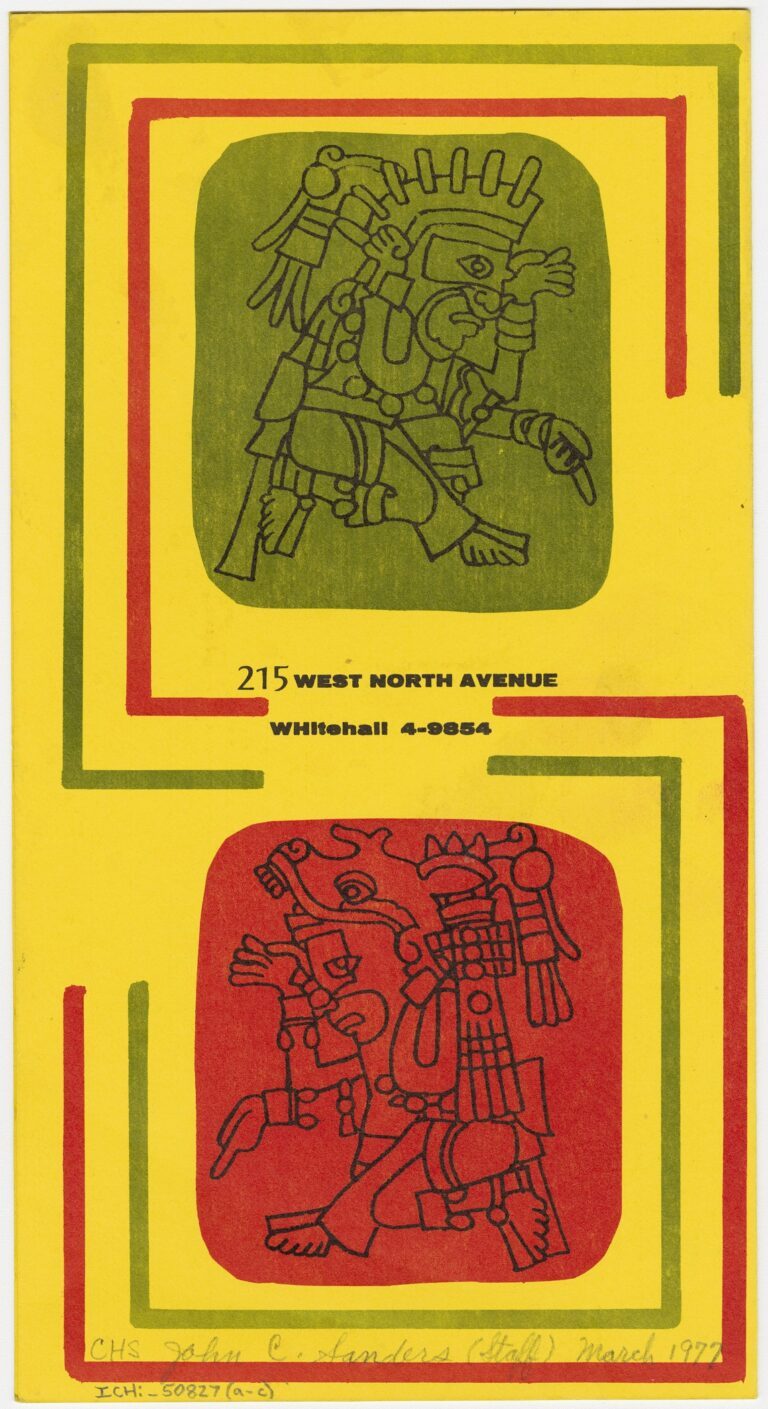
Front and back of menu from Cafe Azteca II at 215 West North Avenue, 1977. CHM, ICHi-050827-001 (left) and ICHi-050827-003 (right)
In Chicago, the Mexican community has been celebrating Las Posadas for many decades. The Chicago Tribune reports that Posada celebrations began along North Avenue in Old Town in 1958. The Café Azteca located at 210 W. North Avenue was a sponsor and regular host site for Posadas. Founded by Federico Camacho, who migrated to Chicago from Oaxaca, Mexico, in 1946, Café Azteca opened on May 11, 1957, as one of only a handful of sit-down Mexican restaurants in the city at the time. Beyond his reputation for delicious food, Camacho was known as a convivial musician, playing guitar and marimba, among others.
In 1969, the café was forced to move because of a road-widening project as part of urban renewal, which the Chicago Sun-Times called in its reporting on June 22, 1969, “another victim of the juggernaut of progress.” It later reopened across the street as Café Azteca II in a former popcorn shop, creating a mission-style interior complete with life-size religious statues that signaled Camacho’s Catholic roots.
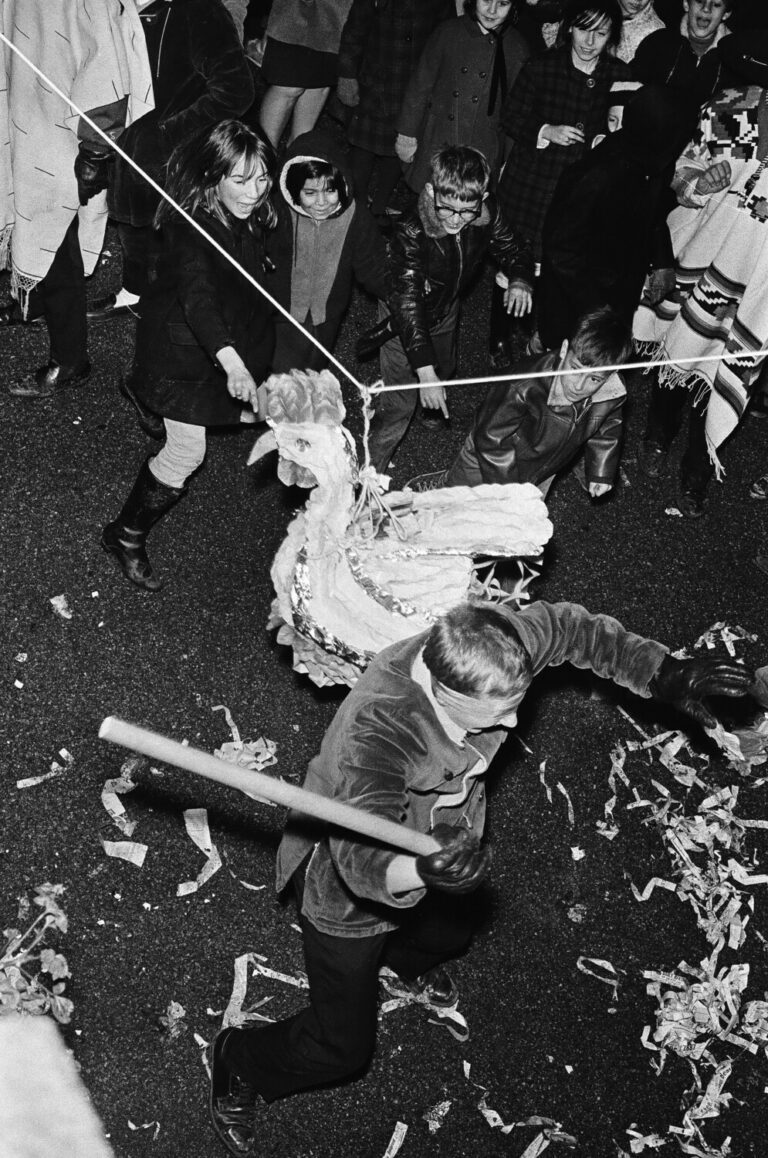
Members of Chicago’s Mexican community celebrate their 9th annual Posada, December 19, 1967. CHM, ST-14002227-0005, Chicago Sun-Times collection
Through the 1960s, the Posadas grew in popularity and public awareness, with John Cardinal Cody, then Archbishop of Chicago, even joining the proceedings in 1968. This series of photographs taken for the Chicago Sun-Times capture the Posadas’ vibrant spirit during the 1960s. That year’s procession began and ended at Café Azteca, led by a burro named “Estrelita” and community members dressed as Mary, Joseph, and the Three Wise Men. It ended like other Posadas, with a breaking of piñatas (this time shaped like birds, not stars) filled with candy and toys and sharing ponche (a hot, spiced fruit punch) and tamales.
Mr. Camacho passed away in 1989, and the café closed for good in 2004.
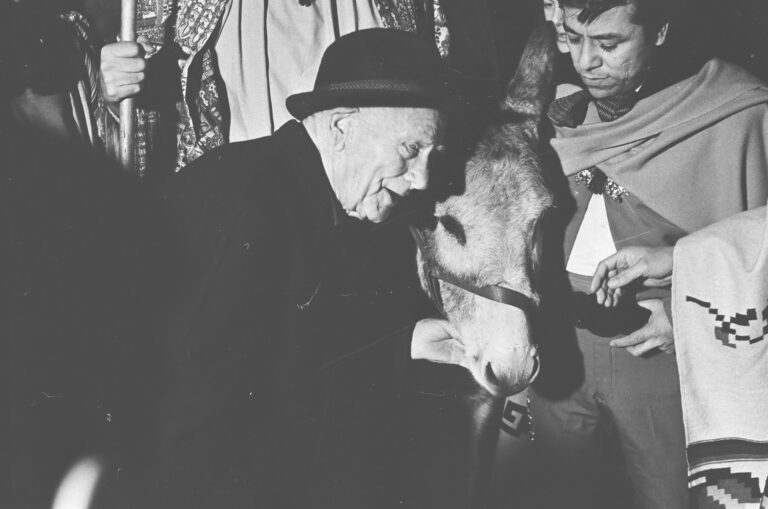
Members of Chicago’s Mexican community celebrate their 9th annual Posada, December 19, 1967. CHM, ST-14002227-0007, Chicago Sun-Times collection
However, Posadas traditions have continued around the city in many different ways. For example, for twenty years, the Archdiocese of Chicago has hosted an Annual Posada for Immigration Reform. Aligned with the spirit of traditional Posadas, the archdiocese’s Office of Human Dignity and Solidarity-Immigration Ministry brings attention to the tradition and the realities immigrant communities face today. As the 2025 event says, “today’s immigrants, like the Holy Family, are vulnerable, seek legislative shelter and protection but often face rejection.”