

Free Event, Partner Event
Partner Event | Day of Remembrance

Date
Sunday, February 22, 2026
2:00 pm - 3:30 pm

Location
Chicago History Museum
1601 N. Clark St.
Chicago,
IL
60614
United States

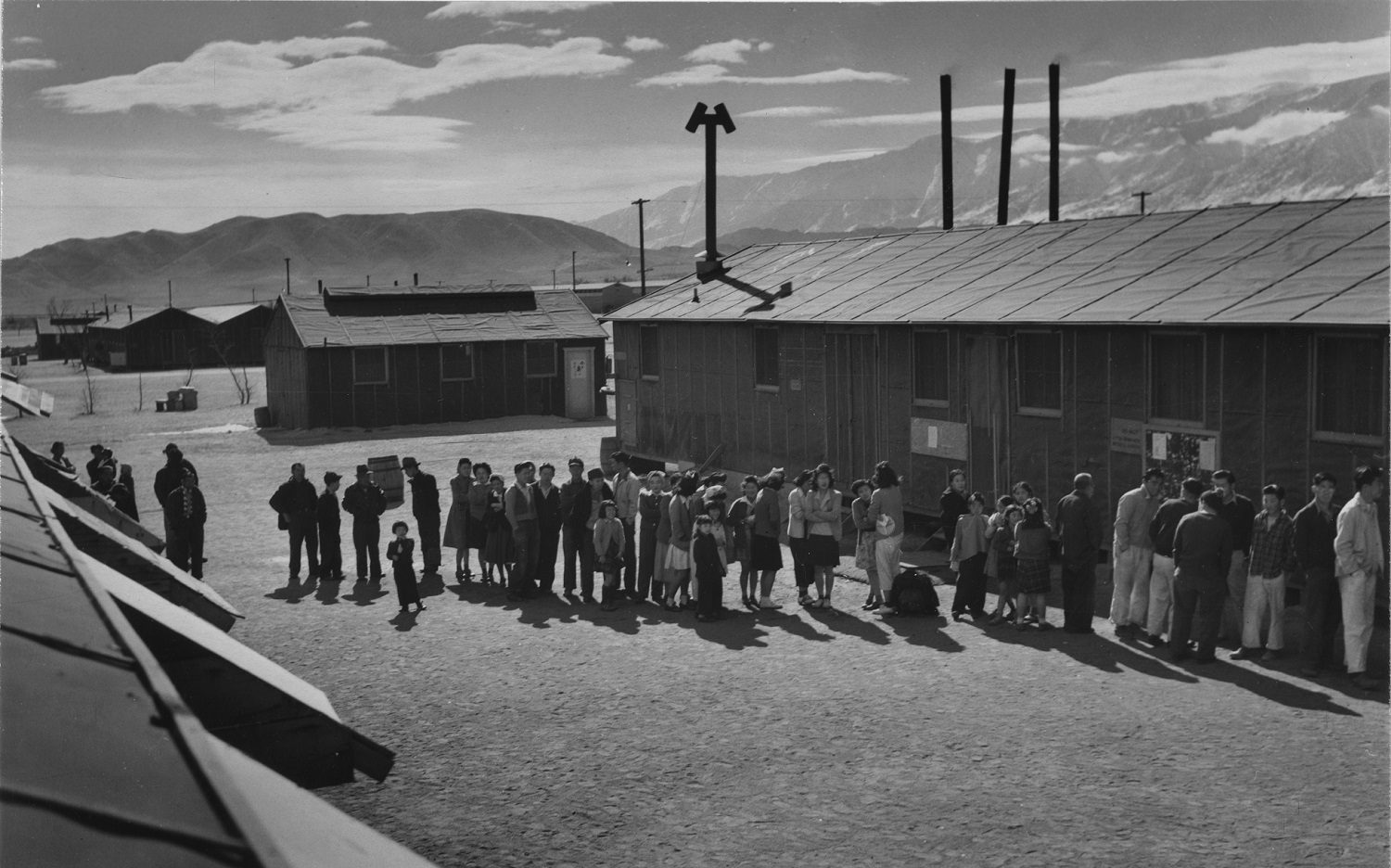
Full Spectrum Features’ latest short docudrama, Enough, will be featured at Chicago’s Day of Remembrance 2026, an annual gathering that marks the signing of Executive Order 9066 and honors the many generations shaped by Japanese American incarceration. Rooted in the decades-long history of the Japanese American Redress Movement—from the lead-up to the 1981 Commission on Wartime Relocation and Internment of Civilians (CWRIC) hearings through the passage of the Civil Liberties Act of 1988—the film turns to community memory and testimony to ask what it takes to confront harm honestly and pursue repair over time.
Following the screening, a panel of community members and practitioners will reflect on how the legacies of Redress speak to present-day struggles around state violence, surveillance, and displacement:
- Rebecca Ozaki – Yonsei, granddaughter of a CWRIC testifier
- Mary Samson – Sansei, Redress organizer
- Dr. Britt Dantley – family therapist and clinician
- Brian Tee – director and actor
- Scott Sakiyama – attorney and anti-ICE advocate
Together, they will consider how practices of storytelling, accountability, and care can interrupt repeating patterns of removal and state violence—both within families and across communities.
The program invites attendees to think with the panel about what “enough” looks like when it comes to justice: How do we honor the labor of those who fought for Redress while recognizing what remains unfinished? How can we speak with urgency about current harms without losing sight of the slow work of healing across generations? A guided discussion will offer space for reflection, questions, and shared commitments to ongoing community care.
This program is free and open to the public. Doors will open at 1:00 pm, and a brief reception will follow the program from 3:30—4:00 pm. Due to limited seating, advanced registration is highly encouraged.
This event is sponsored by Full Spectrum Features, Chicago Japanese American Council, Japanese American Citizens League – Chicago Chapter, Chicago Japanese American Historical Society, Japanese Mutual Aid Society of Chicago, and Japanese American Service Committee.
Schedule
1:00 p.m. – Doors open
2:00 p.m. – Program
3:30 p.m. – Reception (water, coffee, tea)
4:00 p.m. – Event concludes
 About the Film
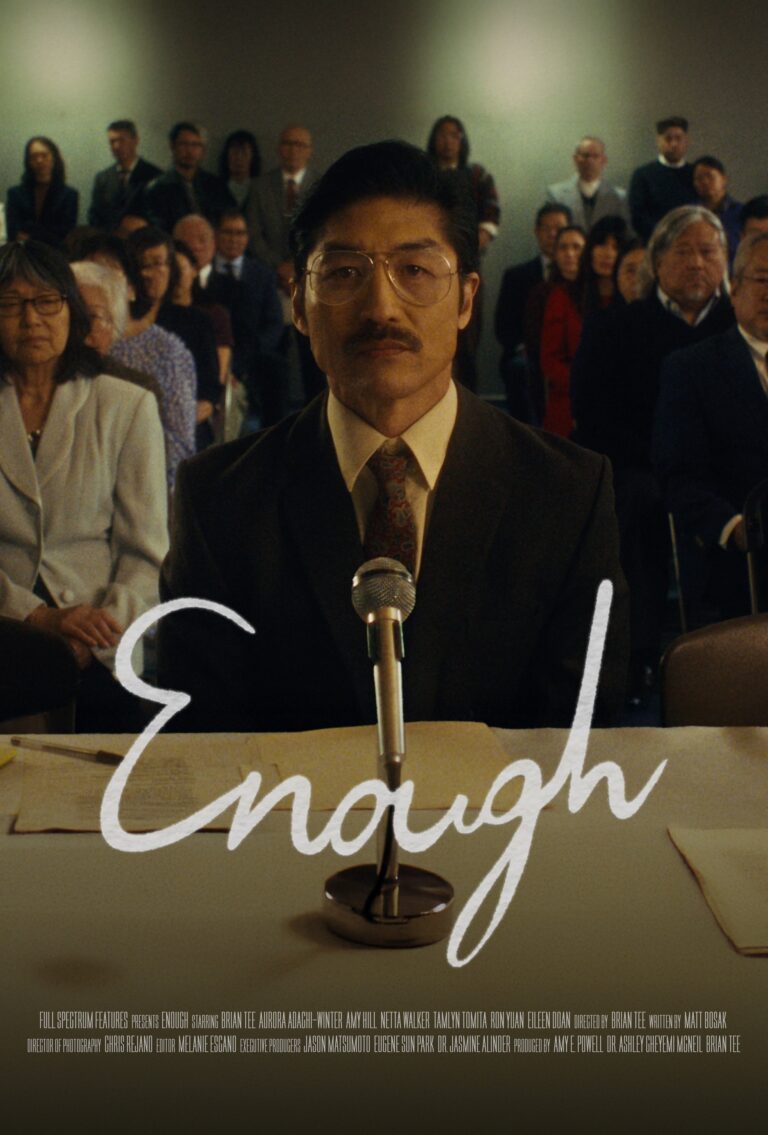
Enough intertwines the journeys of two determined young women, separated by time but united by purpose: Ashley, a biracial student frustrated by the societal controversies and erasure of racial justice efforts in the present day, and Erika, a Japanese American teenager in 1981 whose father, Brian Takakura (played by Tee), a reserved and reluctant attorney, is drawn into a landmark reparations hearing for World War II incarceration survivors.
As Ashley discovers Erika’s story in the archives of her school library, she is pulled into a forgotten past—where the Japanese American community, fractured by differing strategies and scars, comes together in a last push for redress. With pressure mounting from younger activists, traditional community leaders, and his own daughter, Brian must decide whether to speak from legal logic or personal truth. What follows is a powerful reckoning: revealing the lingering trauma of incarceration, the generational cost of silence, and the courage it takes to break it.
Content Advisory: This film has dialogue that references alcoholism and domestic violence.
Speakers
Brian Tee is the director, producer, and lead actor in Enough. He is known for his role as Dr. Ethan Choi in Chicago Med, and stars opposite Nicole Kidman in Amazon Prime’s Expats, directed by Lulu Wang. With blockbuster appearances in The Fast and the Furious: Tokyo Drift, Jurassic World, and Teenage Mutant Ninja Turtles 2, Tee’s versatility extends to TV hits like Grey’s Anatomy and Grimm, alongside notable guest roles. Tee, a UC Berkeley graduate fluent in Japanese and Korean, draws inspiration from his family, wife Mirelly Taylor, and daughter Madelyn Skyler. Tee’s return to the stage in Snow Falling on Cedars earned praise, showcasing his multifaceted talent and dedication to his craft.
Mary Samson is a Sansei and the treasurer of the Japanese Mutual Aid Society of Chicago. She is a member of the Intergenerational Conversations Planning Committee and is a group facilitator. She also serves on the Day of Remembrance planning committee. In the 1980s, she worked with the National Council for Japanese American Redress and the Chicago Ad Hoc Redress Committee. In April 1987 she was present at the Supreme Court in Washington, DC, to hear NCJAR present the class action lawsuit. Her parents, grandparents, aunts, uncles, and cousins were incarcerated at Tule Lake. Her father was a No-No Boy. One of her uncles was killed in combat, fighting in Italy, as a member of the 442 Regimental Combat Team. For his sacrifice, he received a Purple Heart.
As a second generation Filipina and fourth generation Japanese American born and raised in Chicago, Rebecca Joy Ozaki (she/her) carries her ancestor’s stories of incarceration, immigration, and hope for intergenerational healing as she works to build the equitable world that future generations deserve. Rebecca serves as the Program Director at the Japanese American Citizens League Chicago Chapter and has a background in social work and community organizing. At JACL Chicago, she leads multigenerational educational programs and healing circles centered on Japanese American incarceration history, identity exploration, and community building.
Dr. Britt Dantley, PsyD, LMFT, CCTP is a licensed marriage and family therapist, Certified Clinical Trauma Professional, educator, and trauma researcher whose work is deeply rooted in the study and treatment of intergenerational trauma. With extensive clinical experience, Dr. Britt specializes in working with individuals, couples, and families impacted by complex trauma, attachment wounds, and systemic stressors. Her clinical niche centers on trauma-informed, relational, and culturally responsive interventions that honor the ways trauma is transmitted across family systems, communities, and generations, while also emphasizing resilience, healing, and post-traumatic growth.
In addition to her clinical work, Dr. Britt serves as a professor in higher education within the social sciences, where she teaches counseling, psychology, and human services courses. Her teaching is informed by both research and lived clinical experience, allowing her to bridge theory and practice while preparing future clinicians and human service professionals to work ethically and effectively with trauma-impacted populations. She is particularly passionate about integrating trauma-informed care, systems theory, and cultural humility into academic training.
Dr. Britt’s research and scholarly interests focus on intergenerational trauma, the impact of historical and systemic oppression on mental health, and the ways family systems adapt to chronic stress and adversity over time. Through her work as a clinician, researcher, and educator, she is committed to advancing trauma-informed frameworks that promote healing at individual, familial, and community levels. Her interdisciplinary approach highlights the importance of understanding trauma not only as an individual experience, but as a relational and societal phenomenon requiring compassionate, informed, and systemic responses.
Scott Sakiyama is a lawyer who lives in Oak Park, Illinois. During WWII, his family was incarcerated at Gila River, Arizona. In mid-2025 Scott left his position as a partner at a large law firm to focus on organizing efforts to resist the abuse of federal power, particularly with respect to immigration. Scott’s organizing includes protests at the ICE facility in Broadview, Illinois. At Broadview, Scott has documented numerous incidents of unjustified use of force by federal, state, county, and local law enforcement. He has also assisted new protestors in organizing direct actions that have received national attention. Scott also volunteers as Rapid Response team member for areas including Oak Park, Melrose Park, Berwyn, and Cicero, among other areas. He has responded to dozens of calls and observed and documented federal activity repeatedly. Scott has also provided jail and courthouse support for families who have had loved ones detained at protests and protestors themselves. Scott was detained himself twice in October 2025 for recording and observing federal immigration enforcement activity. During the second incident, he was detained at gunpoint by Border Patrol agents in front of his daughter’s elementary school.